

1. Write Clear and Structured Code
First of all, a clean structure makes your work much easier to read. Consequently, it reduces common errors during the development process. This is because organized code acts as a map for other developers. To achieve this, you should follow these steps:
- Clear Naming: Therefore, use names that truly describe what your variables do.
- Logical Separation: Moreover, try to split your code into small, focused modules.
- Consistent Style: Additionally, always follow one specific style across all your files.
2. Avoid Code Duplication
Repeating the same logic often makes maintenance very hard. Furthermore, it increases the risk of bugs. In contrast, using smart optimization tips can save you time. For example, consider the following methods:
- Reusable Functions: Hence, extract shared logic into simple functions.
- Modular Design: Similarly, build components that you can use again.
- DRY Principle: Thus, ensure you do not repeat the same logic twice.

3. Use Comments Wisely
Smart comments help clarify your intent. However, they should not clutter the screen. If you write them properly, they become very effective tools. Therefore, you should focus on these usage tips:
- Explain Purpose: Specifically, focus on “why” you wrote the code, not “what” it is.
- Keep Updated: Also, make sure to maintain accurate comments over time.
- Stay Concise: In addition, avoid any unnecessary or long explanations.
4. Maintain a Clean Project Structure
An organized structure helps you work faster. Moreover, it makes navigation much simpler for the whole team. Because of this, staying organized is vital. To keep things clean, follow these guidelines:
- Clear Folders: For instance, group all files by their specific responsibility.
- Meaningful Names: Likewise, ensure file names reflect their purpose clearly.
- Stable Layout: Finally, keep your structure consistent across the project.
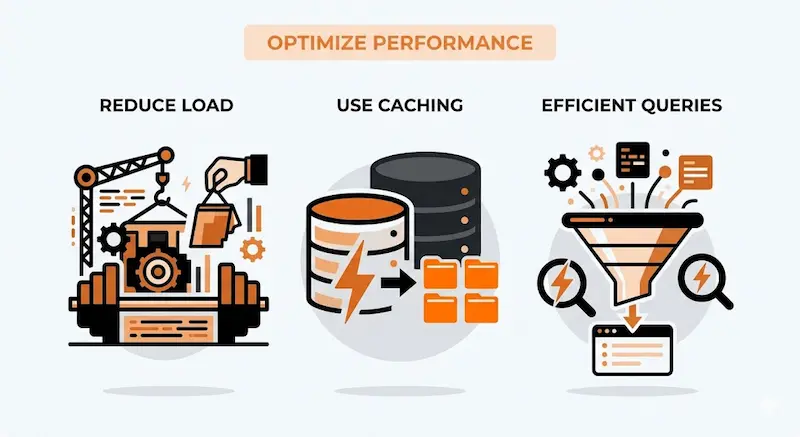
5. Optimize Performance
Efficient code improves overall speed. Additionally, it helps reduce the usage of system resources. Since users love fast apps, this is a top priority. Consequently, try these performance tips:
- Reduce Load: First, avoid any heavy operations that aren’t needed.
- Use Caching: Secondly, store repeated data in a smart way.
- Efficient Queries: Lastly, optimize how you access and fetch data.
6. Handle Errors Properly
Good error handling keeps your system stable. Furthermore, it makes the app’s behavior more predictable. If something goes wrong, the system should react calmly. To ensure this, consider these steps:
- Clear Messages: Hence, provide useful details when an error occurs.
- Graceful Handling: Also, try to avoid total crashes during failures.
- Logging System: In addition, track all issues for better debugging later.
7. Secure Data and Operations
Security is essential for protecting sensitive data. Therefore, it prevents unauthorized people from accessing your files. Because threats are everywhere, you must be careful. Please follow these measures:
- Validate Input: For example, never trust any external data automatically.
- Encrypt Data: Moreover, use encryption to protect private information.
- Access Control: Finally, limit user permissions very carefully.

8. Write Testable Code
Testable code helps you find bugs early. Consequently, this improves the overall quality of your project. By keeping things simple, testing becomes a breeze. Therefore, apply these testing practices:
- Isolated Logic: First, keep all your components independent.
- Unit Testing: Next, test every single function separately.
- Clear Output: Also, ensure your results are always predictable.
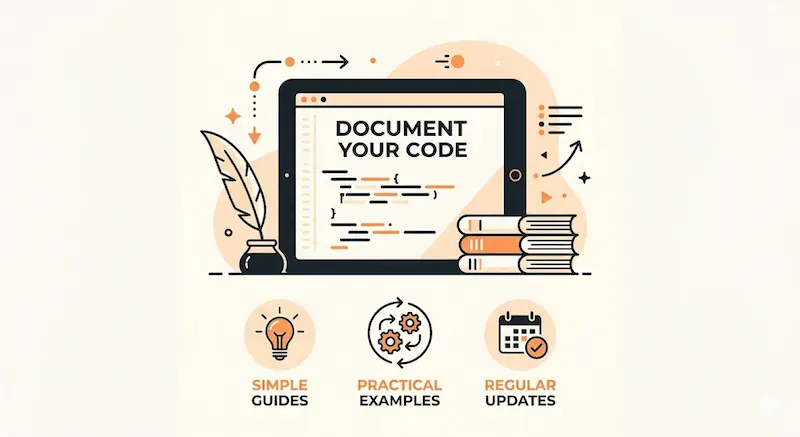
9. Document Your Code
Good documentation makes future updates much easier. Furthermore, it helps new developers understand your work quickly. Since memory fades, writing things down is vital. Use these helpful tips:
- Simple Guides: To begin with, explain how the code works simply.
- Practical Examples: Similarly, show real scenarios to help others.
- Regular Updates: Lastly, always keep your docs accurate and fresh.
10. Use Version Control Systems
Version control helps you track every change. Moreover, it makes team collaboration much smoother. Because you can undo mistakes, it gives you peace of mind. Follow these key practices:
- Track Changes: Specifically, record every update with a clear note.
- Branching: Also, use branches to work safely on new features.
- Clean Merges: Finally, review all code before merging it.
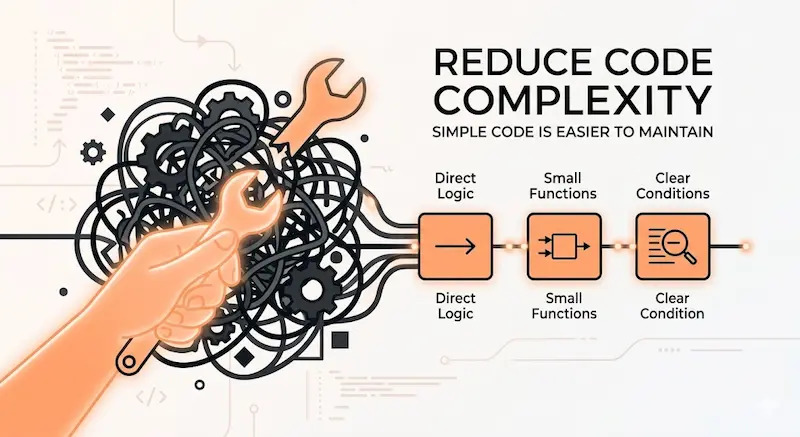
11. Reduce Code Complexity
Simple code is much easier to maintain. In addition, it is far less likely to have hidden bugs. Since complex logic is hard to follow, simplicity is your best friend. Try these tips:
- Direct Logic: For example, avoid adding complexity that isn’t needed.
- Small Functions: Moreover, ensure each function does only one task.
- Clear Conditions: Thus, keep your logic very readable for everyone.
12. Review Code Regularly
Regular reviews help improve overall quality. Consequently, they allow you to catch hidden issues early. If you work with a team, this process is even more valuable. Follow these steps:
- Frequent Checks: Hence, review your work after every major change.
- Gradual Improvements: Also, refine your structure slowly over time.
- Peer Feedback: In addition, always seek insights from your peers.