Introduction to Web Development and Databases
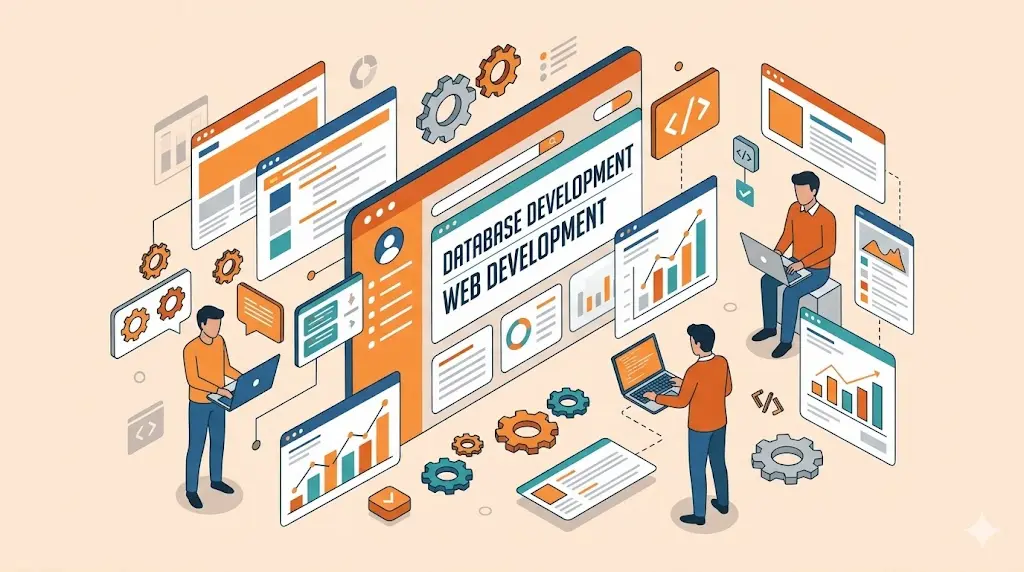
The integration of web development and databases is a fundamental foundation. Therefore, it is essential for building complete and efficient digital systems. This process ensures a smooth connection between the interface and stored data.
Core Connections Between Web and Databases
- Basic structure understanding: First, you must recognize how the interface connects to data quickly.
- Data flow: Moreover, we explain how data moves between the user and the system clearly.
Building Web Interfaces and User Experience
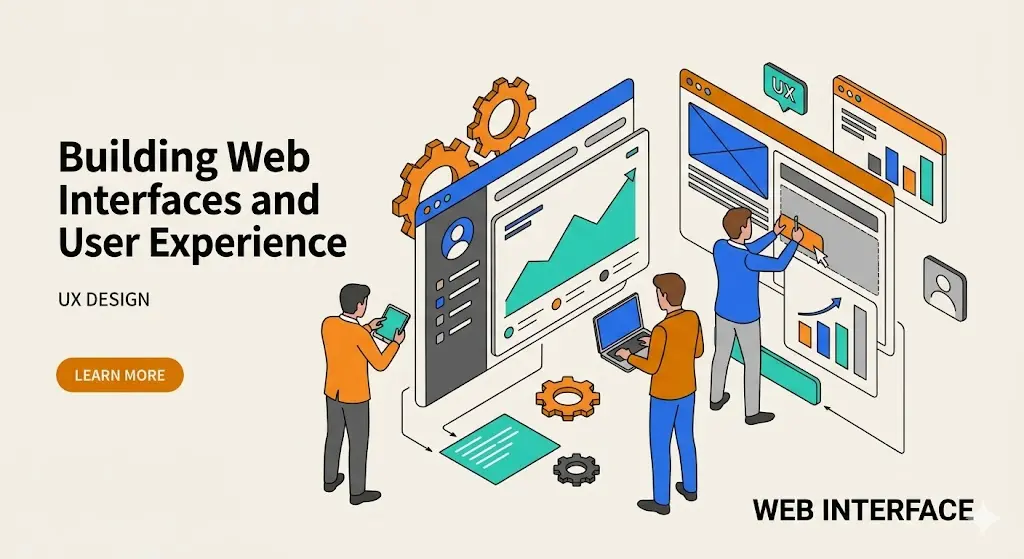
This stage focuses on designing user-friendly interfaces. Consequently, these designs improve how people interact with the system. Simple layouts lead to a much better overall experience.
Fundamentals of UI Design
- Responsive design: In addition, interfaces should adapt smoothly to all screen sizes.
- Clear user experience: Thus, reducing complexity makes core functions easier to find.
- Element organization: Finally, content must be structured logically for easy navigation.
Backend Logic and Operations Management
At this level, operations behind the interface are handled carefully. Because of this, the system ensures efficient performance and stability. It acts as the brain of the application.
Server-side Operation Mechanism
- Request handling: For example, it executes user commands and links them to data.
- Process management: Furthermore, it controls data flow in an organized way.
Database Design and Relationships
This section focuses on building a structured data model. Specifically, a good model ensures easy access and updates. Organizing data correctly prevents many future problems.
Data Structuring and Relationship Building
- Table organization: First, you should divide data into clearly connected entities.
- Defining relationships: Consequently, linking data reduces redundancy and improves efficiency.
Data Queries and Analysis
Modern systems rely on queries to extract information. As a result, a Google report shows that optimizing queries improves performance. Speed is vital for large systems today.
Data Extraction and Analysis
- Query execution: In fact, this means retrieving required data accurately and quickly.
- Result analysis: Moreover, we convert this data into usable and clear information.
Interface Integration with Services
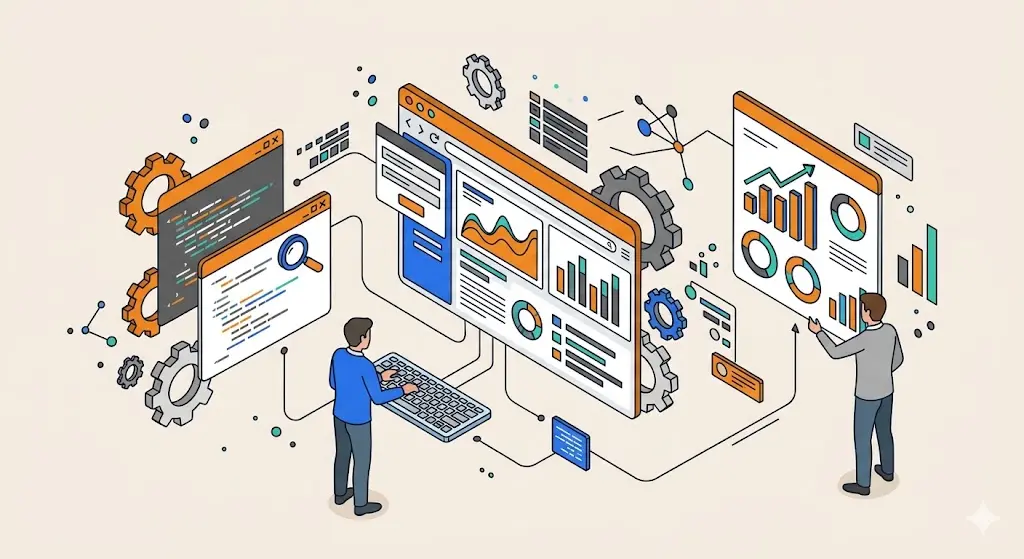
The front-end must be connected with back-end services. Thus, this ensures a continuous data flow. Without this link, the application cannot function in real-time.
Integrating Front-end with Back-end Services
- System linking: First, create a direct connection between the interface and data.
- Data exchange: Secondly, send and receive information without any interruption.
- Response formatting: Finally, ensure data is displayed correctly to the end user.
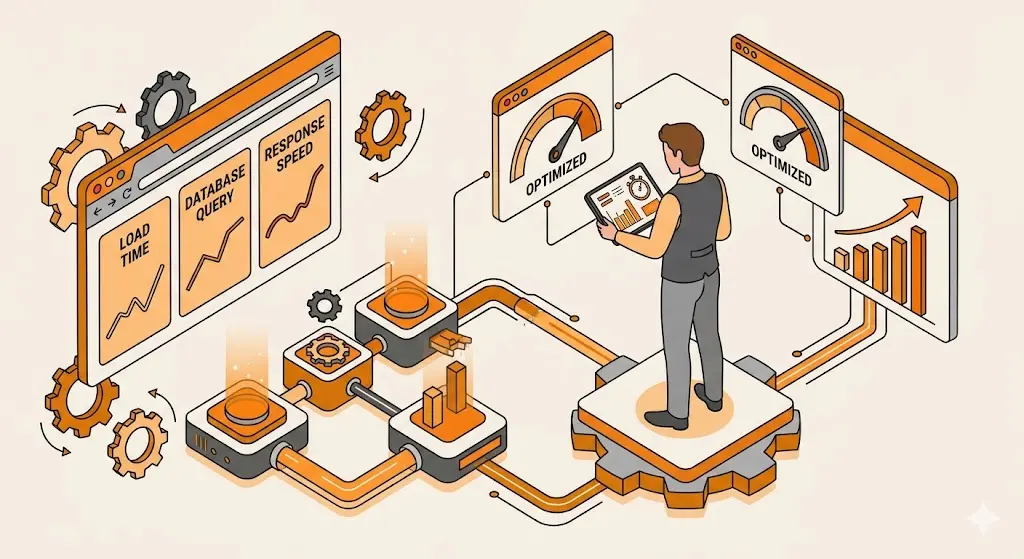
Performance Optimization and Response Speed
Improving performance makes the system more stable. For instance, Microsoft reports indicate that optimization reduces response time. Users stay longer when the system is fast.
System Performance Improvement
- Reducing load time: Initially, we enhance data and interface access speed.
- Resource management: Also, use minimal memory and processing power for efficiency.
System Security and Information Protection
Security is essential to protect user data. Therefore, we must prevent unauthorized access at all costs. A secure system builds trust with your customers.
Information Security and Data Protection
- Data protection: For example, always encrypt information during transfer and storage.
- Access control: Next, define clearly who can access specific data.
- Activity monitoring: Finally, track unusual system behavior to stay safe.
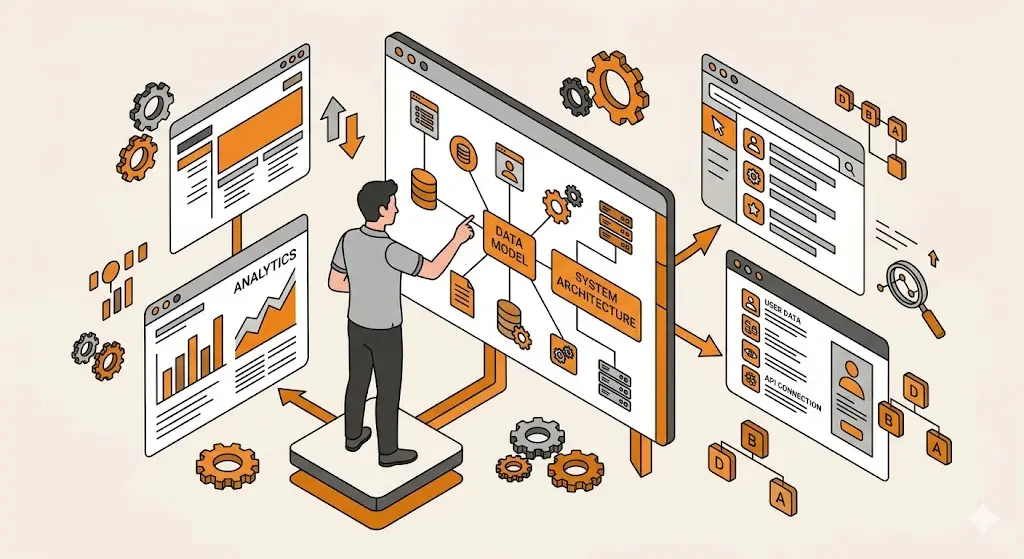
Data Modeling and System Architecture
Data modeling helps build a very clear system. Consequently, the application becomes easier to scale later. A solid architecture is the foundation of growth.
Data Modeling and Structure Design
- Model design: First, create a structure that defines data and relationships.
- Unifying architecture: Thus, the system stays organized and simple to develop.
System Testing and Quality Assurance
Testing ensures the system works perfectly before release. In addition, IBM reported that early bug detection reduces repair costs. Quality is a priority for every developer.
Quality Testing and Reliability Assurance
- Function testing: Initially, ensure all features work as expected.
- Bug detection: Moreover, find and fix issues before users see them.
System Deployment and Operations Management
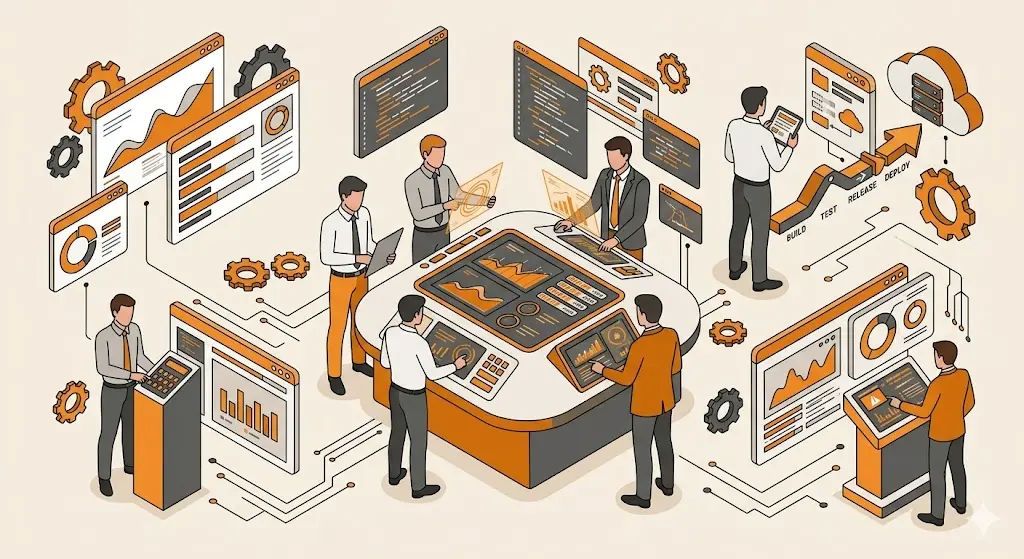
Deployment moves the system into the live environment. Statista reports show that cloud systems have accelerated this process. Therefore, users can access your work instantly.
System Deployment in Production Environment
- Environment setup: To begin, prepare the system to run in real conditions.
- Operation monitoring: Next, track performance after release to ensure stability.
Maintenance and Future Expansion
Maintenance ensures continuous efficiency over time. Because the world changes, the system must also evolve. This keeps the application modern and useful.
System Continuity and Future Development
- Continuous updates: For example, regularly add improvements and new features.
- Bug fixing: Furthermore, resolve any issues as soon as they appear.
- System scaling: Finally, support more users and data easily as you grow.