
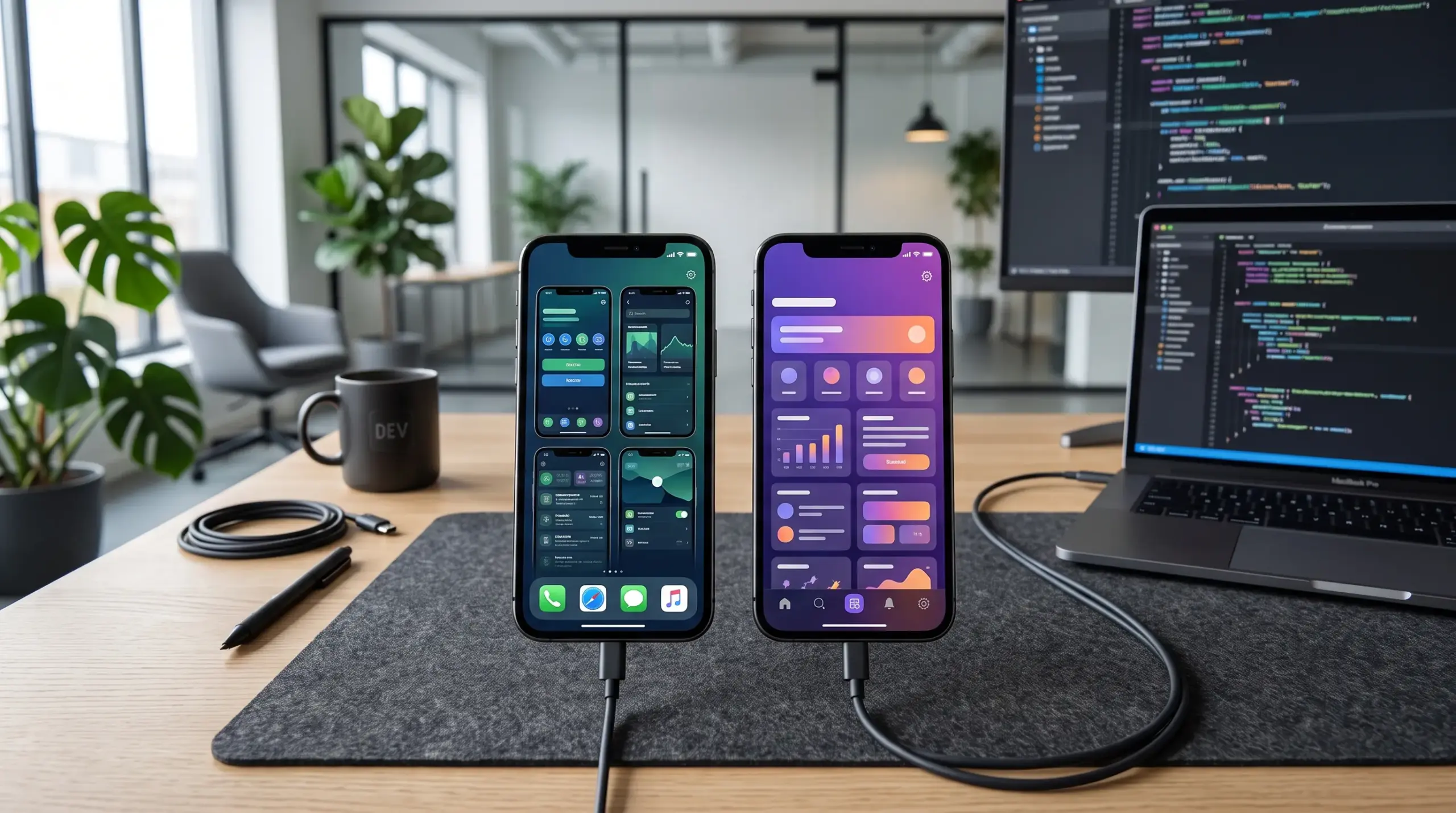
Hybrid vs. Native App Development: Key Differences
First, mobile applications can be developed using different approaches. Consequently, developers must consider performance needs, target platforms, budget, and project requirements. Furthermore, the choice between native and hybrid development directly affects the user experience, development process, and long-term maintenance.
- Understanding Apps: Native apps are built for one OS, whereas hybrid and cross-platform solutions use shared code to support multiple platforms easily.
- Native Applications: Built specifically for a particular operating system and optimized for its capabilities.
- Hybrid Applications: Use a shared codebase to support applications across different platforms.
- Cross-Platform Development: Balances development speed with support for multiple operating systems.
Native App Development Technologies
Native applications use official programming languages, frameworks, and development tools. As a result, this approach allows applications to interact efficiently with device features and system resources.
- High Performance: It enables direct access to device resources for efficient task execution.
- System Integration: It supports cameras, sensors, notifications, and native device functions.
- Greater Control: It provides extensive flexibility when working with system components and interfaces.

Hybrid App Development Technologies
Hybrid development allows a single application to target multiple platforms while sharing a significant portion of code. Consequently, this approach simplifies development and reduces duplicated work. According to Statista data, Flutter was used by 46% of developers worldwide in 2023, highlighting continued adoption.
- Faster Development: It reduces the time required to build separate versions for different platforms.
- Less Duplication: It reuses application components instead of developing them independently.
- Simpler Updates: It allows many changes to be applied easily through a shared codebase.
Performance and Response Speed
Application performance depends on how efficiently technology interacts with device resources. Furthermore, StatCounter data shows that Android accounted for 66.96% of the global market in August 2026, making broad platform compatibility an important consideration.
- Resource Usage: Application size and execution methods affect memory and battery consumption.
- Response Speed: Differences become noticeable during intensive operations and complex interactions.
- Graphics Performance: Games and visually demanding applications require consistent processing.

Development Cost and Required Time
Application development costs depend on more than just the selected technology. Specifically, platforms, features, design complexity, and maintenance needs influence the overall effort.
- Shared Codebase: This can reduce development effort when targeting multiple platforms.
- Separate Development: This requires dedicated implementation when specialized features are needed.
- Feature Complexity: Advanced functionality generally requires additional development and testing resources.
User Experience and Interface Design
The development approach influences interface implementation. Moreover, StatCounter reported that iOS represented about 32.94% of the global market in August 2026, demonstrating why multi-platform consideration is vital.
- Consistent Design: It adapts interfaces and interactions to the expectations of each operating system.
- Touch Responsiveness: It provides quick responses to buttons, gestures, and user interactions.
- Clear Navigation: It organizes screens and menus to reduce unnecessary user steps.
Maintenance and Future Updates
Applications require continuous maintenance. Consequently, updates help apps remain compatible with operating systems, fix technical issues, and introduce new functionality over time.
- Bug Fixing: This resolves problems that appear during regular usage or after system updates.
- Component Updates: This keeps frameworks, libraries, and tools compatible with newer releases.
- Continuous Testing: This verifies application stability after significant changes and updates.
Security and User Data Protection
Application security depends on secure coding practices, permissions, and data protection. According to Verizon’s 2025 report, 85% of organizations saw an increase in attacks, highlighting strong security needs.
- Data Encryption: It protects sensitive information during storage and transmission.
- Permission Management: It limits app permissions to only necessary features.
- Security Updates: They address vulnerabilities quickly and reduce potential security risks.

Deployment and Platform Compatibility
Publishing an application requires compatibility testing across different devices. Furthermore, applications must meet the policies of the platforms where they will be distributed.
- Device Testing: This tests applications across different screen sizes and OS versions.
- Store Compliance: This ensures that the application meets required publishing policies.
- Size Optimization: This reduces unnecessary files to make installation efficient.
Choosing the Right Development Approach
There is no single development approach that works best for every application. Therefore, the right decision depends on objectives, target audience, budget, and timeline.
- Application Type: Performance-intensive apps benefit more from native development.
- Multiple Platforms: Shared codebases are useful when targeting several operating systems.
- Budget and Timeline: Cross-platform development is suitable when faster deployment is a priority.
Conclusion
Native and hybrid development each offer distinct advantages. Ultimately, the best choice should be based on goals, budget, and long-term maintenance needs.
- Native Strengths: Native methods provide strong performance and deep system integration.
- Hybrid Benefits: Cross-platform approaches simplify multi-platform deployment and reduce duplicated work.
- Final Decision: Always align your technology choice with project requirements and long-term goals.