

Understanding Analytic Accounting and Cost Allocation
Analytic accounting helps link expenses and revenues accurately. Therefore, companies can connect financial data directly to specific projects or departments. As a result, management gains clear visibility into operational costs.
Financial Analysis Objectives:
- Expense Tracking: Monitor actual expenses continuously for each cost center.
- Profitability Measurement: Evaluate the return of each department independently. Furthermore, compare overall project margins easily.
Structuring Cost Centers in Odoo
Odoo enables the creation of a multi-level cost center tree. In addition, this flexible structure fits any organizational hierarchy smoothly. Consequently, managers can track financial flows at every business level.
Analytic Structure Components:
- Main Groups: Divide costs according to larger business sectors.
- Sub-Accounts: Link daily transactions directly to detailed departments.
- Allocation Rules: Define automatic allocation percentages for shared expenses.

Automatic Linking Between Entries and Analytic Accounts
Gartner studies confirm that financial process automation improves data accuracy by 35%. Moreover, automated allocation helps eliminate human errors caused by manual routing. Therefore, accounting workflows become faster and reliable.
Direct Linking Mechanisms:
- Automatic Routing: Record analytic movements immediately when posting entries.
- Invoice Matching: Link purchase invoice items directly to active cost centers.
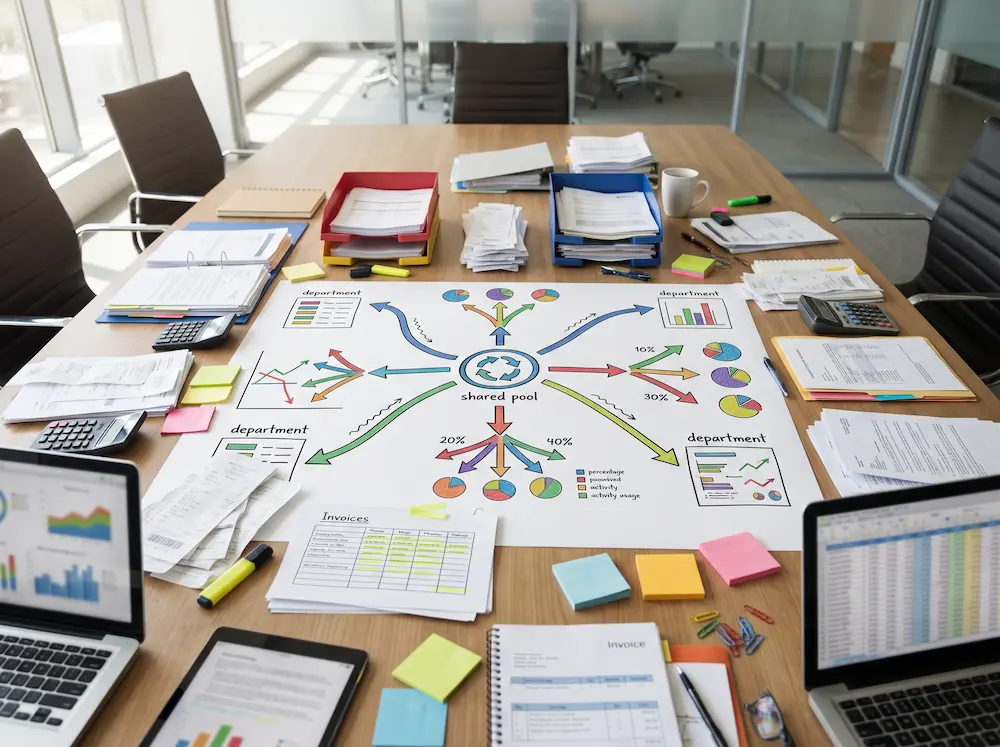
Allocating Shared and Administrative Expenses
Financial pressure requires fixed costs to be distributed fairly across teams. However, manual distribution can be difficult. Thus, using consistent allocation criteria ensures balanced financial reporting across departments.
Smart Allocation Methods:
- Percentage-Based Allocation: Distribute expenses according to preset budget criteria.
- Conditional Allocation: Link costs directly to real activity consumption rates.
- Periodic Reconciliation: Handle analytic differences smoothly at period end.
Monitoring Cost Center Budgets
Odoo allows businesses to set target budgets for each cost center. Furthermore, managers can compare planned targets with actual expenses in real time. As a result, budget control becomes proactive instead of reactive.
Financial Control Elements:
- Estimate Entry: Set clear financial limits for active projects.
- Variance Analysis: Detect budget overruns early to prevent financial losses.
Linking Analytic Accounts with Project Management
McKinsey research shows that tracking financial indicators reduces operating costs by 25%. Additionally, direct integration helps measure the exact cost of working hours. Therefore, project profitability is tracked accurately.
Project Integration Areas:
- Timesheet Tracking: Convert logged working hours directly into analytic costs.
- Purchase Linking: Deduct project materials directly from the allocated budget.

Analytic Profit and Loss Reports
Advanced reporting enables instant income statements for each production line. Consequently, executives can identify profitable branches quickly. In addition, decision-makers receive reliable real-time analytics.
Financial Reporting Outputs:
- Separate Statements: Display the performance of each cost center independently.
- Performance Comparison: Evaluate department efficiency based on real returns.
- Instant Export: Extract detailed financial reports easily for leaders.
Controlling Indirect Costs
Effective spending management requires constant oversight of indirect expenses. Otherwise, operating budgets can become inflated over time. Therefore, systematic tracking is essential for long-term savings.
Financial Control Procedures:
- Expense Tracking: Record all marginal expenses accurately without delay.
- Waste Analysis: Identify and eliminate unjustified spending items quickly.

Financial Analysis and Future Cash Flow Forecasting
Deloitte research indicates that real-time data analysis improves cash efficiency by 20%. Moreover, historical trend analysis reveals activities that consume high liquidity. Consequently, future planning becomes much safer.
Financial Forecasting Tools:
- Trend Analysis: Evaluate cost growth patterns across different business periods.
- Liquidity Planning: Direct available cash toward high-growth operational areas.
Digital Archiving and Analytic Auditing
PwC studies confirm that archiving documents digitally reduces audit errors by 40%. Furthermore, electronic records streamline external financial reviews. As a result, compliance checks are completed faster.
Technical Audit Requirements:
- Audit Trail: Record all rule modifications automatically for total transparency.
- Secure Archiving: Store all linking documents safely within an encrypted database.