1. What is an Enterprise CMS
First, an Enterprise Content Management System helps organizations manage digital content in a clear way. It allows teams to create, edit, and publish pages easily. As a result, companies maintain a professional website structure while keeping their content organized and accessible.
Key System Features
- Flexible Content Management: Teams can create and edit pages quickly through a simple dashboard. In addition, content updates become faster and easier.
- Multi-User Access: Different team members can work together. Each user has a specific role and permission level.
- Content Organization: Pages and digital assets stay structured. Therefore, teams find and manage files without confusion.
2. Importance of CMS for Modern Businesses
Today, modern businesses rely on CMS platforms to manage their websites efficiently. With the right system, companies publish content faster and maintain consistent updates. As a result, websites stay active and useful for visitors.
Benefits for Businesses
- Fast Website Updates: Teams can publish changes immediately. Therefore, websites stay up-to-date with minimal effort.
- Better User Experience: Well-organized pages help visitors navigate easily. In addition, users find information faster.
- Centralized Management: All website content stays in one place. As a result, teams manage pages and files more efficiently.

3. Fast Digital Content Publishing
A CMS allows organizations to publish digital content quickly. First, writers can add new articles or updates easily. Then, the system manages formatting and publishing. As a result, companies support their digital marketing strategies more effectively.
Publishing Tools
- Simple Content Editor: Users can write and format pages easily. Therefore, content creation becomes faster.
- Scheduled Publishing: Content can be scheduled in advance. As a result, posts appear automatically at the right time.
- Live Preview: Editors can review the page before publishing. This helps avoid mistakes and improves content quality.
4. Integrated Website Design
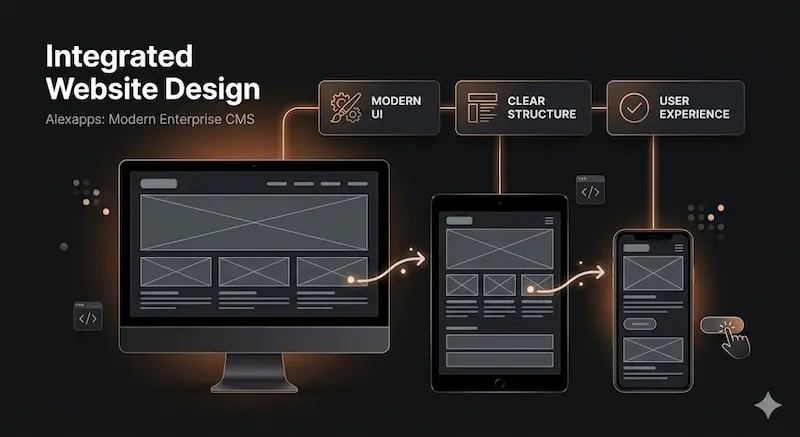
A modern CMS combines functionality with strong design. First, it creates a clean interface for visitors. Then, it organizes information clearly. As a result, users enjoy a smooth browsing experience.
Design Essentials
- Modern Interface: Websites appear clean and professional. In addition, layouts adapt to different screen sizes.
- Clear Page Structure: Content sections remain organized. Therefore, visitors understand the information quickly.
- Improved User Experience: Navigation becomes simple and logical. As a result, users spend more time on the website.
5. Website Development with CMS
Developers often build websites using CMS platforms. First, these systems provide a strong foundation. Then, developers add features when needed. As a result, websites remain flexible and scalable.
Development Advantages
- Flexible Architecture: New features can be added easily. Therefore, websites evolve with business needs.
- Technology Integration: Modern CMS platforms support many web technologies. In addition, they integrate with external tools.
- Scalable Platforms: Websites grow smoothly over time. As a result, businesses avoid rebuilding their sites frequently.
6. Search Engine Optimization
Search engine visibility is important for any website. A CMS helps organize content clearly. Therefore, search engines understand pages better. As a result, websites achieve stronger rankings.
SEO Essentials
- Structured Headings: Clear headings organize information. Consequently, search engines analyze content easily.
- Keyword Optimization: Relevant search terms improve visibility. In addition, they attract the right audience.
- Fast Website Speed: Page speed improves rankings. Therefore, visitors enjoy a smoother experience.

7. Easy Content Management
CMS platforms simplify content management. First, teams access a central dashboard. Then, they edit pages quickly. As a result, website updates become easier.
Management Tools
- Clear Dashboard: All website content appears in one place. Therefore, management becomes simple.
- Quick Editing: Text and images update instantly. In addition, editors save time.
- Media Organization: Files stay structured and searchable. As a result, teams manage assets efficiently.
8. Supporting Digital Teams
CMS platforms help digital teams collaborate. First, team members receive defined roles. Then, they manage tasks together. As a result, content production becomes faster.
Team Collaboration Features
- Task Distribution: Managers assign tasks clearly. Therefore, each team member knows their role.
- Content Review: Articles are reviewed before publishing. Consequently, quality remains high.
- Continuous Updates: Teams update pages regularly. As a result, websites stay active and relevant.

9. Website Security
Website security protects digital assets. Modern CMS platforms provide strong protection tools. Therefore, websites remain safe from many threats.
Security Features
- Regular Updates: Systems receive security improvements continuously.
- User Permissions: Access to sensitive areas remains controlled.
- Backup Systems: Website data can be restored quickly if needed.
10. Professional User Experience
User experience affects how visitors interact with websites. A structured CMS improves navigation and clarity. As a result, users find information quickly.
UX Factors
- Clean Layouts: Simple designs improve readability.
- Fast Navigation: Visitors move between pages easily.
- Responsive Design: Websites work smoothly on phones and computers.
11. CMS and Digital Marketing
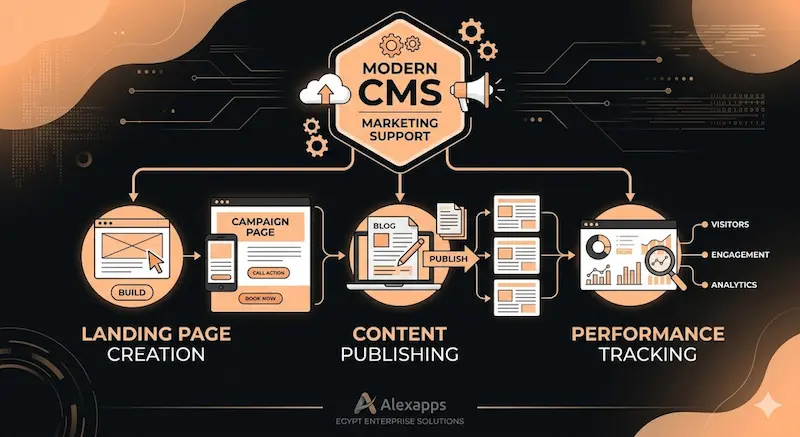
CMS platforms support marketing strategies. They allow businesses to publish landing pages and blog articles easily. Therefore, companies reach more visitors online.
Marketing Advantages
- Landing Page Creation: Campaign pages can be created quickly.
- Content Publishing: Businesses publish articles regularly.
- Performance Tracking: Teams monitor visitor behavior and engagement.
12. Building Business Websites
Many companies use CMS platforms to build professional websites. These sites present services clearly and strengthen brand identity.
Website Components
- Service Pages: Detailed pages explain business offerings clearly.
- Company Profile: Businesses introduce their history and mission.
- Contact Options: Visitors connect with companies easily.
13. Supporting Digital Business Growth
A powerful CMS helps businesses grow online. It improves visibility and strengthens brand presence. As a result, companies attract more potential customers.
Business Growth Impact
- Wider Audience Reach: Businesses reach more users across the internet.
- Stronger Brand Identity: Professional websites improve brand image.
- More Business Opportunities: Companies attract new clients and partnerships.
14. Alexapps CMS Development Services
alexapps provides CMS design and development services for businesses. The company focuses on fast and reliable website solutions.
Company Services
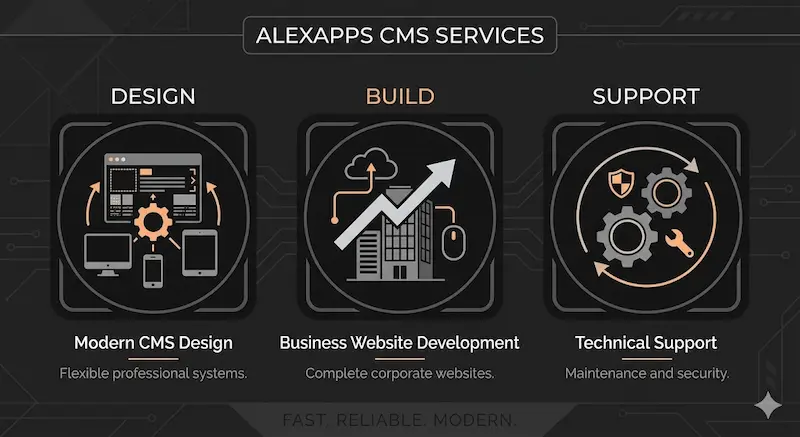
- Modern CMS Design: Flexible systems designed for professional websites.
- Business Website Development: Complete web solutions for companies.
- Technical Support: Continuous updates and maintenance services.
15. Why Choose Alexapps
alexapps helps businesses in Egypt build modern CMS platforms. The company focuses on fast publishing and efficient website management.
Company Advantages
- Strong Technical Expertise: The team builds modern and reliable digital solutions.
- Professional Team: Specialists in design and development manage projects carefully.
- Local Presence: The company operates from Cairo and Alexandria.