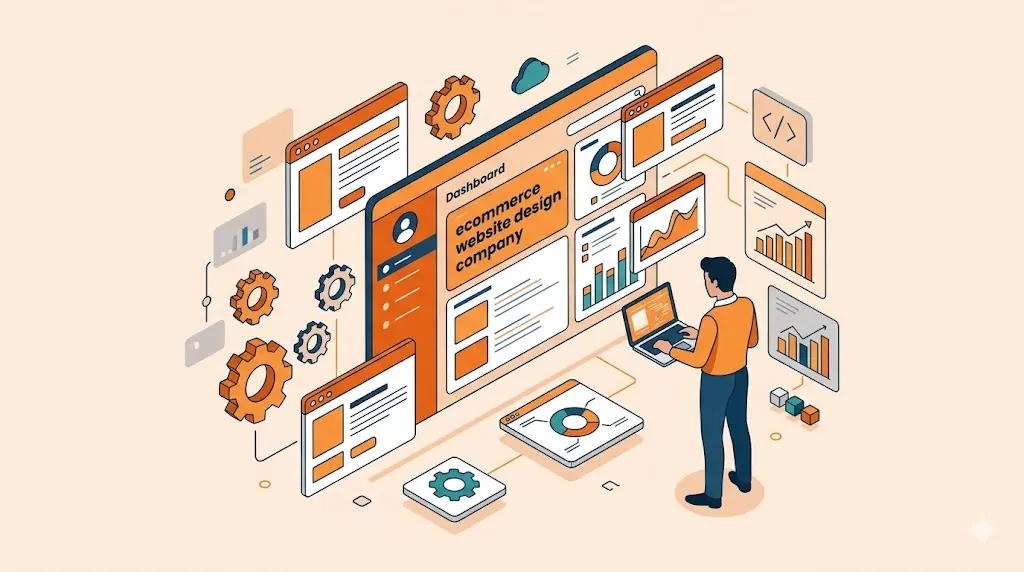
1. Importance of a Successful Ecommerce Design
A well-designed store attracts visitors effectively. Moreover, it helps convert them into buyers quickly. Consequently, your business grows faster. Therefore, focus on these key design elements:
- Clear Interface: It makes browsing simple and very smooth for everyone.
- Product Organization: This helps users find items easily without any confusion.
- Fast Loading Speed: High speed reduces bounce rates and keeps users engaged.
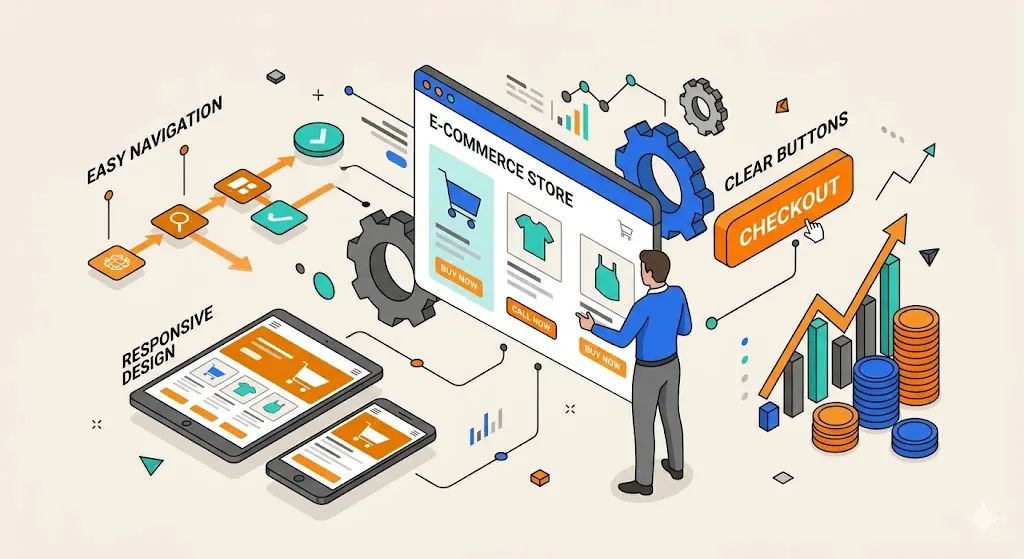
2. User Experience and Its Impact on Sales
A smooth user experience builds trust between you and the customer. Furthermore, it encourages users to complete their purchases easily. As a result, sales figures improve. You can enhance experience by:
- Easy Navigation: Provides quick access to all website sections without effort.
- Responsive Design: This ensures your store works perfectly on all digital devices.
- Clear Buttons: Simplifies user actions by making every step visible and direct.
3. Choosing the Right Colors and Fonts
Colors and fonts play a key role in grabbing attention. In addition, they improve readability significantly. Thus, choosing the right visual style is vital. Consider these basics:
- Balanced Colors: These enhance your brand identity and professional look.
- Readable Fonts: Using clear fonts improves how users digest your content.
- Good Contrast: It highlights key elements so they stand out immediately.
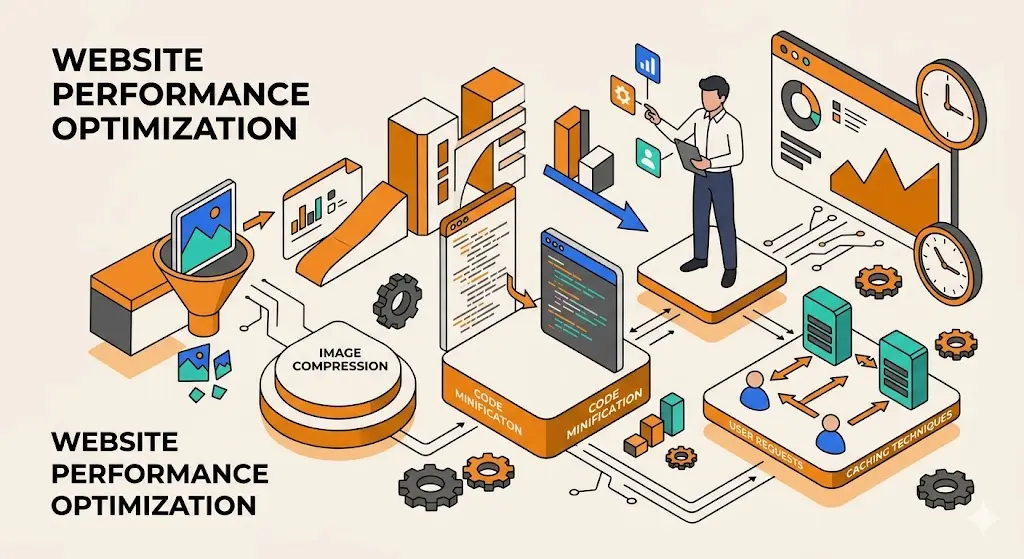
4. Website Speed and Performance Optimization
Fast websites keep users engaged and happy. However, slow sites lose customers quickly. For instance, Google says 53% leave slow pages. Therefore, apply these tips:
- Image Compression: This reduces file sizes without losing much quality.
- Code Minification: Cleaning your code improves total load time effectively.
- Caching Techniques: Caching speeds up page delivery for returning visitors.
5. Professional Product Page Structure
Good structure helps users decide faster. Also, it makes comparing items much easier. As a result, sales usually increase. Ensure you include these essentials:
- High-Quality Images: Clear photos show product details and build desire.
- Short Descriptions: Briefly deliver key info so users don’t get bored.
- User Reviews: These build trust and social proof for new buyers.
6. Importance of Search Engine Optimization (SEO)
SEO helps your website reach a much larger audience. Moreover, it targets users who are actively searching for you. Because of this, SEO is vital. Follow these fundamentals:
- Keywords Usage: Match user search intent by using precise and relevant words.
- Optimized Titles: Attractive titles increase click rates and site visibility.
- Internal Links: These improve navigation flow and help engines index your pages.

7. Content Role in Attracting Customers
Quality content builds strong trust with your audience. Furthermore, it boosts conversions significantly. For instance, HubSpot highlights its massive impact. Therefore, use these content types:
- Product Descriptions: Explain all benefits clearly to convince the user easily.
- Helpful Articles: These provide extra value and keep users coming back.
- FAQs Section: Quickly answer common questions to remove any buying doubts.
8. Website Security and Data Protection
Security is essential for keeping user trust high. Moreover, it protects sensitive data from hackers. Consequently, a safe site is a successful one. Follow these practices:
- SSL Certificate: This secures data transfer between users and your site.
- Regular Updates: Always fix vulnerabilities to stay safe from new threats.
- Security Systems: Use tools that actively prevent cyber attacks.

9. Multiple Payment Integration
Offering various payment options makes checkout easier. Additionally, it speeds up the process for users. Thus, more people complete their orders. Include these methods:
- Credit Cards: This is a widely used and trusted global option.
- Digital Wallets: Provide a fast and very convenient way to pay.
- Cash on Delivery: Many users still prefer this traditional method.
10. Performance Analysis and Decision Making
Analyzing data helps you understand user behavior. Furthermore, Statista notes that data-driven stores grow faster. Therefore, use analysis to improve results. Try these tools:
- Traffic Reports: Use these to track exactly where your visitors come from.
- Behavior Analysis: Understand how users interact with your site pages.
- Conversion Rate: Measure your success in turning visitors into customers.
11. Continuous Development and Improvement
Ongoing updates keep your store modern. Moreover, according to Forrester, improvement increases user satisfaction. As a result, you stay competitive. Apply these strategies:
- Design Updates: Always follow modern trends to look fresh and professional.
- New Features: Regularly add features that enhance the user experience.
- Performance Testing: Ensure efficiency by testing your site speed often.