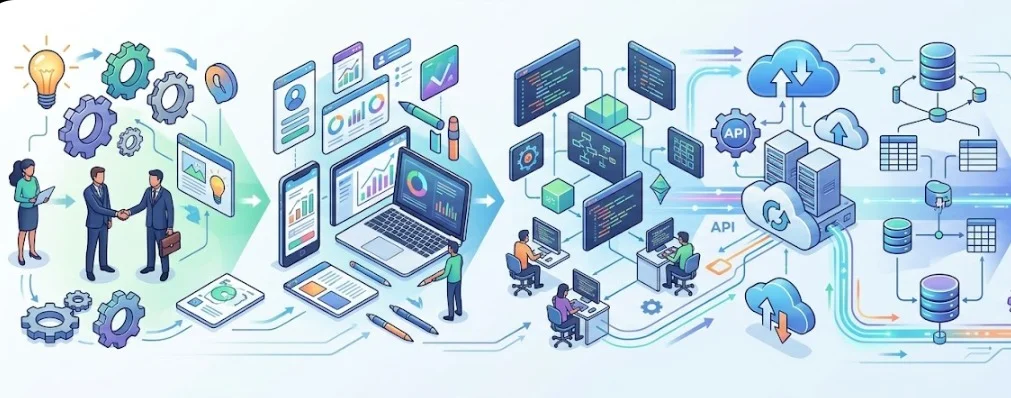
In a fast-paced digital world, enterprises need reliable technology to stay competitive. Relying on fragmented freelancers or limited in-house teams often leads to inconsistent results. A full-service agency like AlexApps provides the strategic oversight needed to build scalable, secure, and high-performance software solutions from start to finish.
To understand the value of a full-stack partner, it helps to break down the key components of professional software development. Here’s how expert services in design, programming, and SEO come together to drive real business growth.
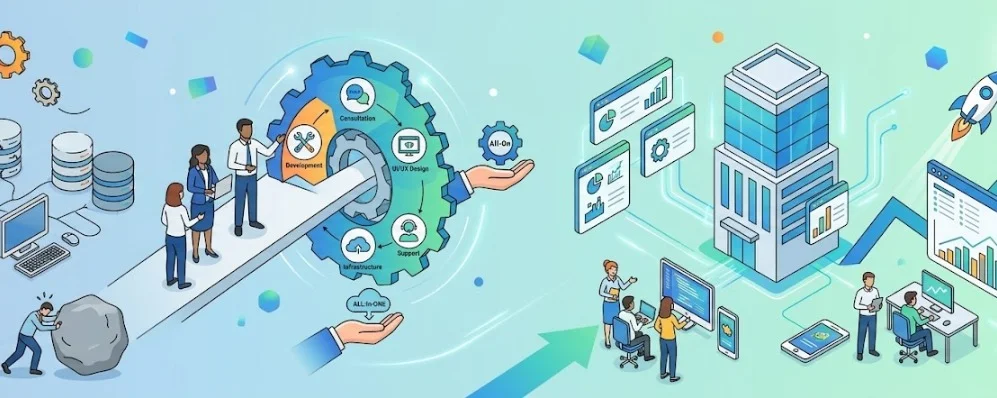
The Foundation: Professional Web Design
Web design is more than just aesthetics—it’s a business tool that guides users and builds trust. Good design simplifies complex data and ensures a smooth interaction with your brand. It aligns your visual identity with functional needs to create a seamless user journey.
Key elements of expert web design include:
- User-Centered Interfaces: Creating pixel-perfect layouts that prioritize clarity and make navigation intuitive for every user.
- Workflow Simplification: Breaking down complex enterprise processes into easy steps to reduce errors and boost productivity.
- Accessibility Compliance: Ensuring your software is usable by people with disabilities, which expands your audience and meets legal standards.
- Data Visualization: Using color and spacing to highlight key metrics and help decision-makers quickly grasp important information.
- Design Systems: Building a library of reusable components to speed up future development and maintain visual consistency.
The Backbone: Website Development & Programming
Once the design is ready, it’s time to turn concepts into clean, functional code. Enterprise development requires a disciplined approach to security, maintainability, and performance. A full-stack agency brings senior developers who specialize in both front-end interfaces and back-end logic.
Essential aspects of the development phase:
- Cross-Platform Responsiveness: Ensuring flawless performance on desktops, tablets, and mobile devices through flexible coding and rigorous testing.
- API Integrations: Connecting new software with existing tools like CRMs or payment gateways to create a unified data ecosystem.
- Secure Coding Practices: Writing code that protects against vulnerabilities like SQL injection and configuring servers to safeguard sensitive data.
- Scalable Architecture: Choosing frameworks and infrastructure that handle growth, ensuring fast load times even as user numbers increase.
- Database Optimization: Designing efficient data structures and queries to retrieve information instantly, even from millions of records.
Building SEO-Friendly Websites
A technically perfect site is useless if customers can’t find it. Building SEO-friendly websites requires developers and strategists to work together from the start. This technical foundation supports all your content marketing and drives organic traffic.
Technical SEO priorities for development:
- Semantic HTML: Using proper heading tags (H1, H2) to help search engines understand your content hierarchy.
- Clean URL Structures: Creating descriptive, keyword-rich URLs and setting up proper redirects when pages change.
- Schema Markup: Adding structured data to enable rich search results (like star ratings) that boost click-through rates.
- Mobile-First Compliance: Ensuring the mobile version contains the same high-quality content, as required by Google’s indexing standards.
- Site Speed Optimization: Minifying code, compressing images, and using caching to achieve load times under two seconds.
Building SEO-Friendly Websites
A technically perfect site is useless if customers can’t find it. Building SEO-friendly websites requires developers and strategists to work together from the start. This technical foundation supports all your content marketing and drives organic traffic.
Technical SEO priorities for development:
- Semantic HTML: Using proper heading tags (H1, H2) to help search engines understand your content hierarchy.
- Clean URL Structures: Creating descriptive, keyword-rich URLs and setting up proper redirects when pages change.
- Schema Markup: Adding structured data to enable rich search results (like star ratings) that boost click-through rates.
- Mobile-First Compliance: Ensuring the mobile version contains the same high-quality content, as required by Google’s indexing standards.
- Site Speed Optimization: Minifying code, compressing images, and using caching to achieve load times under two seconds.
Maximizing Performance & User Experience
For global enterprises, website performance is non-negotiable. Slow sites frustrate users and harm productivity. A dedicated agency optimizes every layer to deliver fast, reliable access. Similarly, a focus on user experience (UX) reduces support costs and increases adoption.
Strategies for top-tier performance and UX:
- Content Delivery Networks (CDNs): Caching site assets on global servers to deliver content quickly to users anywhere in the world.
- Media Optimization: Using modern image formats and lazy loading to reduce page weight without sacrificing quality.
- Code Splitting: Loading only the code needed for the current page, which dramatically improves initial load times.
- User Journey Mapping: Analyzing how different personas navigate your software to identify and fix friction points.
- Usability Testing: Observing real users to uncover confusing elements and refine the interface for better results.
Ongoing Support & Continuous Improvement
Launching your software is just the beginning. Enterprise applications need constant maintenance for security patches, feature updates, and bug fixes. Partnering with a reliable agency like AlexApps (Alexandria Company) ensures your technology evolves with your business.
Critical post-launch services:
- 24/7 Security Monitoring: Detecting and neutralizing threats before they lead to data breaches.
- Regular Framework Updates: Keeping the codebase updated to patch vulnerabilities and stay compatible with modern browsers.
- Feature Expansion: Managing a product backlog and seamlessly integrating new features as your needs grow.
- Performance Audits: Monitoring site speed and uptime, then providing reports with actionable recommendations.
- Emergency Bug Fixes: Having protocols ready to quickly roll back faulty updates or deploy hotfixes to minimize downtime.
Strategic IT Consulting & Technology Advisory
Building great software requires more than just coding skills—it demands a clear strategy aligned with your business goals. A full-service agency acts as a trusted advisor, helping you navigate complex technology decisions and avoid costly mistakes. From planning to execution, expert guidance ensures every investment delivers maximum business value.
Key strategic services that drive successful software projects:
- Technology Road mapping: Creating a step-by-step plan for your digital future. Experts assess your current systems and prioritize features based on business impact to ensure smooth, predictable progress.
- Regular Framework Updates: Keeping the codebase updated to patch vulnerabilities and stay compatible with modern browsers.
- Vendor Selection Assistance: Getting objective help to choose the right tools and partners. This saves you from expensive mistakes and ensures every third-party solution perfectly fits your needs.
- Business Analysis: Translating vague ideas into clear technical specs. Professional analysts document exact requirements to prevent scope creep and keep projects on budget.
- Architecture Planning: Designing systems that integrate seamlessly with your existing environment. Proper planning ensures new applications communicate smoothly with legacy systems.
- IT Audit Support: Preparing your software for compliance reviews. Agencies help document processes and implement controls to meet industry regulations before auditors arrive.
- Proof of Concept (POC) Development: Testing risky ideas with small prototypes. This validates technical feasibility early, reducing uncertainty before major investment.