1. What is Full-Stack Development?
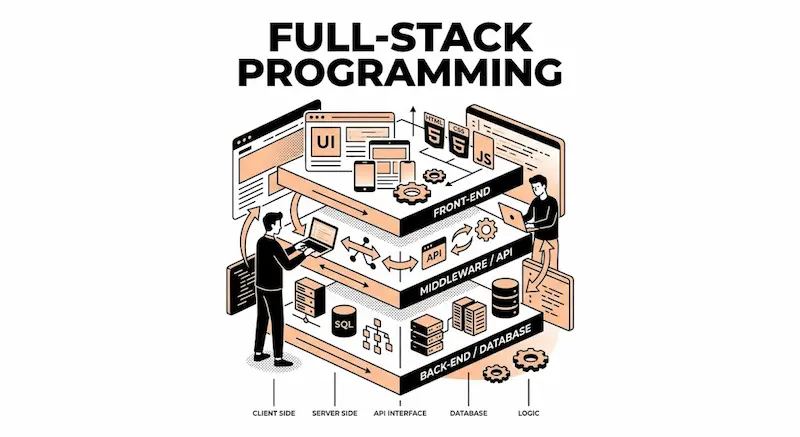
Full-stack development involves building both the front-end and the back-end. Consequently, developers must bridge the gap between user experience and server logic. As a result, projects become more cohesive and functional.
Key Full-Stack Components
- Front-End Layer: This layer builds responsive user interfaces for better interaction.
- Back-End Logic: It handles processing and operations behind the scenes.
- Data Storage: This part manages structured information safely and effectively.
2. Why Learn Full-Stack?
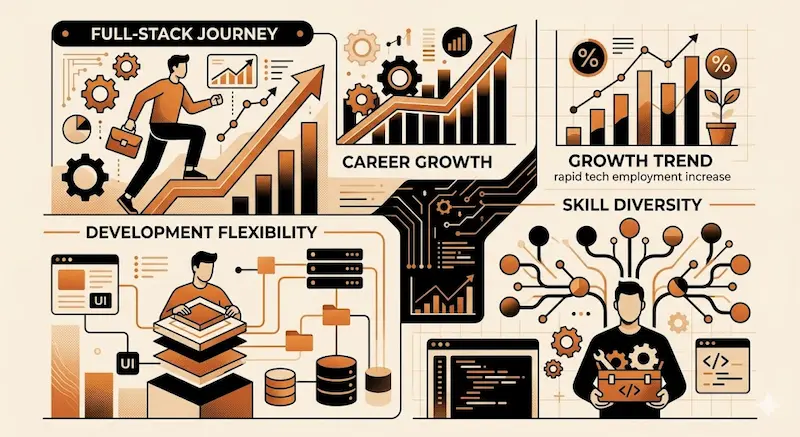
Learning full-stack enables a deep understanding of the entire development lifecycle. Furthermore, according to the **U.S. Bureau of Labor Statistics**, tech employment is growing rapidly. Therefore, mastering these skills provides massive professional leverage.
Benefits of Full-Stack
- Skill Diversity: This path covers multiple technical areas and expands your knowledge.
- Career Growth: It significantly expands your job opportunities in a competitive market.
- Development Flexibility: You will be able to build complete systems from scratch.
3. Front-End Essentials
The front-end focuses on visual design and user interaction within the application interface. In addition, it ensures that the website looks great on all devices. As a result, users enjoy a seamless and engaging experience.
Core Front-End Tools
- HTML & CSS: These tools provide the structure and styling basics for any page.
- JavaScript: This language adds dynamic functionality and makes pages interactive.
- Frameworks: These libraries speed up modern UI development significantly.
4. Back-End Essentials
The back-end manages heavy server-side operations. Consequently, it acts as the invisible brain of the app. In fact, **Stack Overflow** surveys reveal that JavaScript and Python remain top choices for these complex operations.
Core Back-End Tools
- Programming Languages: They execute complex application logic and process data.
- Servers: They handle incoming requests from users and send back responses.
- APIs: These bridges connect different systems and allow them to communicate.
5. Role of Databases
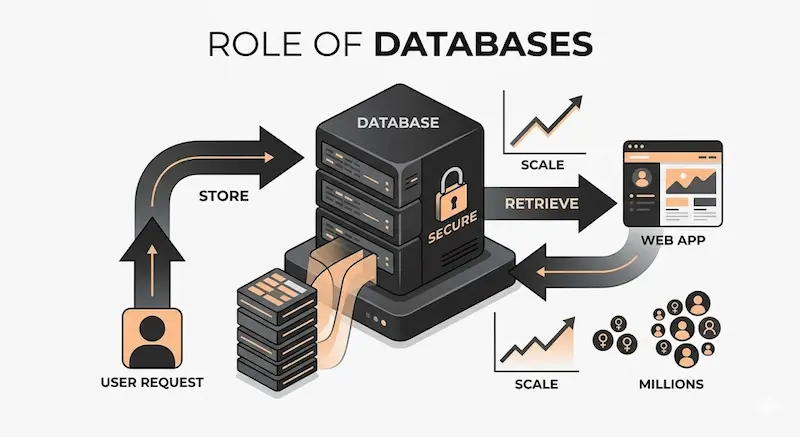
Databases store and retrieve application data efficiently. Furthermore, they keep records organized and secure. As a result, the entire application can scale and handle millions of users easily.
Types of Databases
- SQL Systems: These manage highly structured data organized neatly in tables.
- NoSQL Systems: They provide flexible data models for non-tabular structures.
- Data Management: This practice optimizes queries to fetch data much faster.
6. Full-Stack Tools
Development relies heavily on tools that enhance daily productivity. Consequently, mastering them saves a lot of manual work. Therefore, focusing on these industry standards is the best approach.
Essential Tools
- Git: This system tracks and manages code changes without losing previous work.
- VS Code: A powerful and popular code editor with massive extension support.
- Terminal: It allows you to run and control system commands directly.
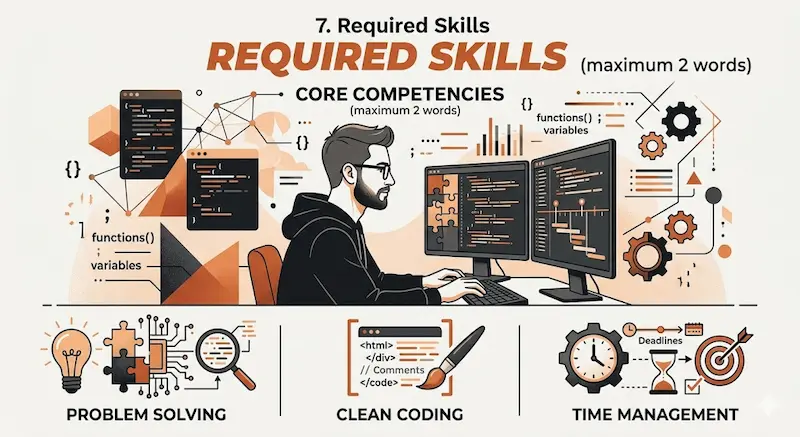
7. Required Skills
Full-stack requires a mix of technical and logical skills. In fact, LinkedIn research shows that problem-solving is among the most requested skills in tech. Consequently, improving these abilities boosts your value.
Core Skills
- Problem Solving: You need to analyze complex issues and fix broken code quickly.
- Clean Coding: This practice ensures you maintain readable and organized code for teams.
- Time Management: It helps you deliver difficult tasks efficiently without missing deadlines.
8. Learning Path
A structured approach helps in mastering development step by step. Consequently, you will not feel overwhelmed by random tutorials. Therefore, following a clear plan is the key to faster progress.
Learning Steps
- Start with Basics: Focus heavily on HTML, CSS, and basic JavaScript first.
- Move to Back-End: Learn server logic, APIs, and database management next.
- Build Projects: Apply your practical skills by creating real-world applications.
9. Common Challenges
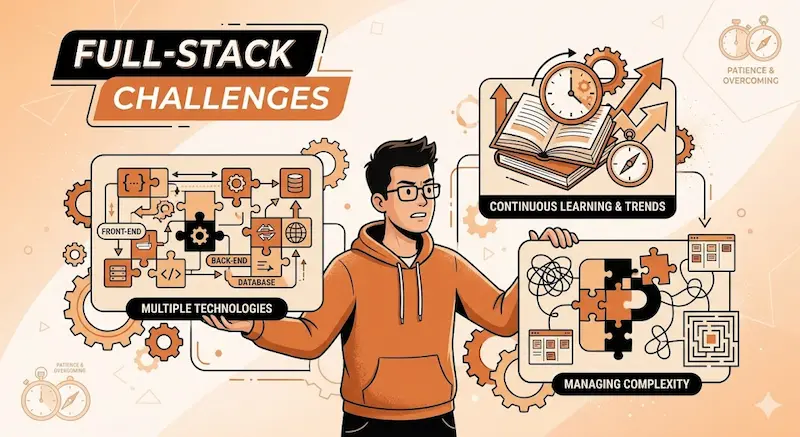
Full-stack development comes with challenges due to its wide scope. However, understanding these obstacles early helps you overcome them much faster. As a result, patience is your best asset.
Key Challenges
- Multiple Technologies: This requires continuous learning and forces you to stay sharp.
- Frequent Updates: You must keep up with fast-moving trends and new libraries.
- Project Handling: Learning how to manage complexity without getting confused is tough.
10. Future of Full-Stack
Demand for full-stack continues to grow with digital transformation. Furthermore, **Softjourn** indicates that over 94% of enterprises now use cloud services. Consequently, cloud skills are vital.
Future Trends
- Cloud Applications: We will see a massive increase in adoption and remote architecture.
- AI Integration: Smarter applications will use machine learning to assist users.
- UX Focus: Companies will invest more in creating better and faster user experiences.
11. Tips for Success
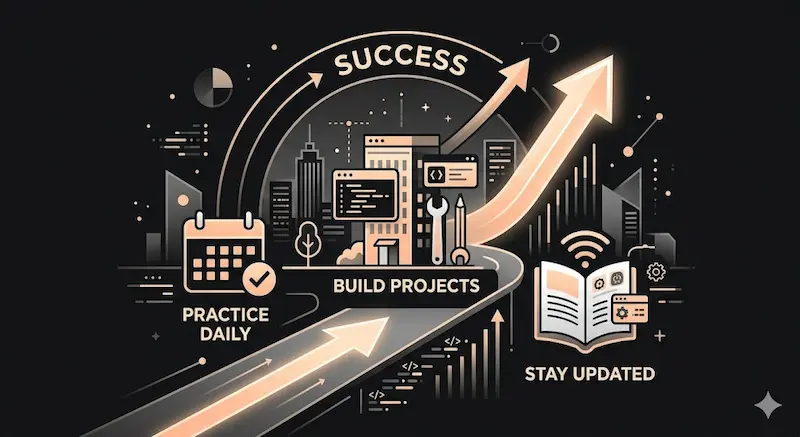
Consistent improvement and practical experience are key to success. Consequently, practicing daily yields better results than studying in long bursts. Therefore, creating small goals is highly recommended.
Practical Tips
- Daily Practice: Code as often as you can to improve your logic continuously.
- Build Projects: Gain real experience by solving practical, real-world problems.
- Stay Updated: Read tech blogs and follow new technologies to stay relevant.