
1. End-to-End Web Development
End-to-end web development helps businesses build a strong online presence. First, we plan each step carefully. Then, we create solutions that match the business goals. Finally, the website is launched smoothly and efficiently.
Core Development Services
- Front-End Development: Clean layouts improve visual appeal. Simple navigation helps users move easily. Therefore, visitors interact more.
- Back-End Development: Strong server systems manage data smoothly. As a result, the website performs well during high traffic.
- Database Management: Organized databases store and retrieve data quickly. Therefore, the user experience becomes faster and more reliable.

2. Requirement Analysis
Clear requirement analysis reduces errors and prevents costly revisions. First, we gather business objectives. Then, we document all requirements clearly. This ensures development begins aligned with the goals.
Planning Process
- Stakeholder Interviews: Teams collect objectives and expectations. As a result, all key requirements are clear.
- Technical Specification Mapping: Defining features in detail avoids confusion. Therefore, developers work efficiently.
- Feature Prioritization: Focusing on core features speeds up launch. Consequently, businesses enter the market faster.
3. Wireframing and Prototyping
Wireframing helps visualize the website before coding begins. First, ideas are sketched early. Then, teams test and refine the user experience. This reduces project risks.
Prototype Benefits
- Layout Structure Planning: Wireframes show page hierarchy clearly. As a result, navigation is logical and easy.
- Interactive Prototypes: Clickable mockups simulate real interactions. Therefore, changes are made before full development.
- Early Feedback Collection: Early feedback improves quality. Consequently, project risks decrease.
4. Responsive Web Design
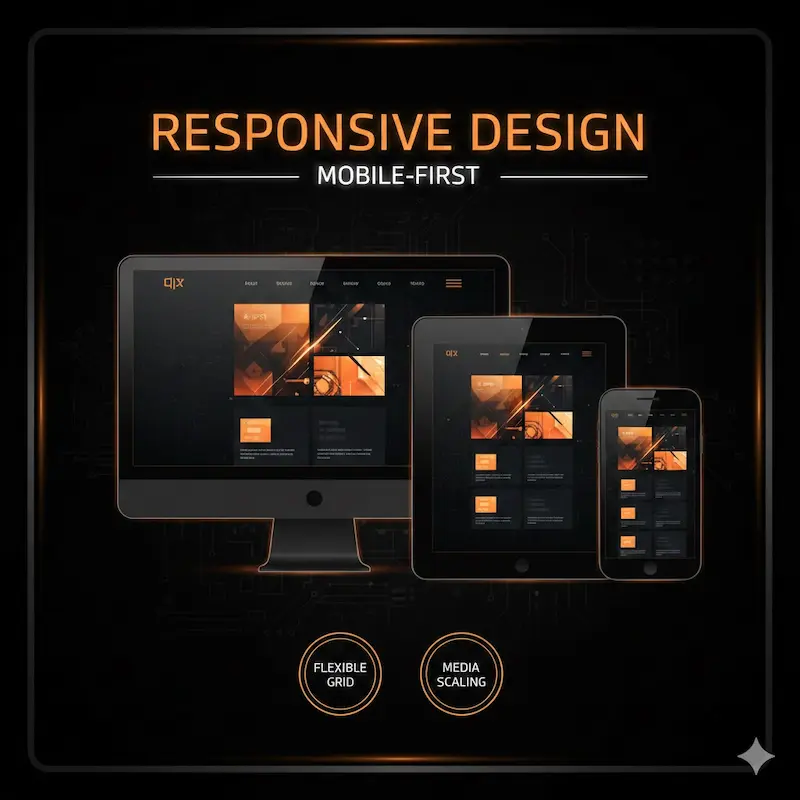
Responsive design ensures websites work on all devices. First, mobile users are prioritized. Then, layouts adapt to larger screens. This maintains consistent performance.
Responsive Strategies
- Mobile-First Design: Focus on smartphones first. Therefore, performance is consistent on all devices.
- Flexible Grid Systems: Grids adjust automatically. As a result, content looks balanced everywhere.
- Cross-Browser Compatibility: Testing prevents display errors. Consequently, user trust increases.
5. Website Security and Reliability
Security protects sensitive data and builds customer trust. First, SSL encrypts communication. Then, firewalls block suspicious activity. Finally, automated backups save data regularly.
Security Measures
- SSL Encryption: Encrypts communication. Therefore, transactions remain secure.
- Firewall Protection: Blocks suspicious traffic. Consequently, cyber threats are reduced.
- Automated Backups: Regular backups allow quick recovery. As a result, downtime is minimized.
6. Performance Optimization
Fast websites improve user satisfaction and SEO. First, images and files are compressed. Then, caching is implemented. Finally, code is refined for better stability.
Speed Optimization Methods
- Image and File Compression: Reduces loading time. Therefore, pages open faster.
- Caching Implementation: Stores temporary data. Consequently, repeat visits are quicker.
- Code Refinement: Unnecessary scripts are removed. As a result, performance remains consistent.
7. Custom Website Features
Custom features help businesses meet unique needs. First, e-commerce stores are set up securely. Then, booking systems are automated. Finally, interactive dashboards provide clear analytics.
Feature Solutions
- E-Commerce Development: Secure online stores simplify transactions. As a result, revenue increases.
- Booking Systems: Automated scheduling reduces manual work. Therefore, service efficiency improves.
- Interactive Dashboards: Dashboards display analytics clearly. Consequently, decision-making becomes easier.

8. Analytics and Monitoring
Analytics measure performance and guide improvements. First, user behavior is tracked. Then, conversions are analyzed. Finally, traffic sources are reviewed to optimize marketing.
Tracking Tools
- User Behavior Analysis: Shows engagement patterns. Therefore, weak pages can be improved.
- Conversion Rate Monitoring: Highlights campaign effectiveness. Consequently, strategies become smarter.
- Traffic Source Reports: Identifies traffic channels. As a result, budget allocation is improved.
9. Content Management Systems
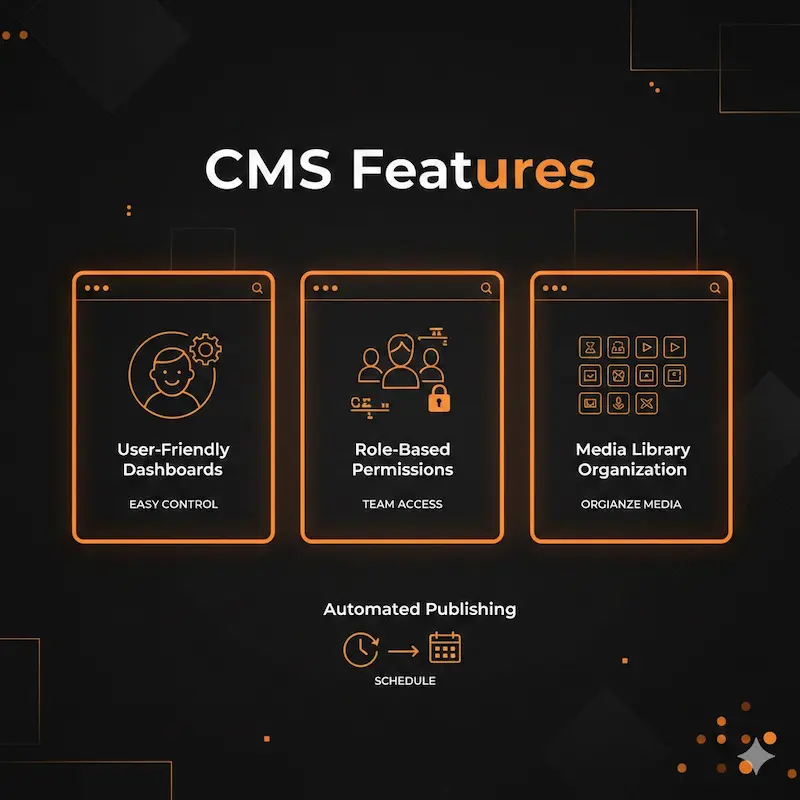
CMS allows easy content control. First, dashboards are user-friendly. Then, role-based access is set. Finally, media management tools simplify publishing.
CMS Advantages
- User-Friendly Dashboard: Quick updates keep content fresh. Therefore, workflow improves.
- Role-Based Access Control: Protects sensitive areas. Consequently, internal security improves.
- Media Management Tools: Organized libraries simplify images. As a result, publishing becomes faster.
10. Local Market Expertise
Understanding the local market improves strategy. First, customer behavior is analyzed. Then, content adapts to cultural trends. Finally, competitor gaps are identified for advantage.
Local Advantages
- Market Insights: Guides design choices. Therefore, campaigns connect better.
- Cultural Awareness: Content matches local trends. Consequently, trust grows.
- Competitor Analysis: Reveals market gaps. As a result, businesses gain advantage.
11. SEO Optimization
SEO increases visibility in search engines. First, keywords are targeted. Then, on-page optimization is done. Finally, technical SEO improves speed and structure.
SEO Components
- Keyword Research: Attracts qualified visitors. Therefore, engagement improves.
- On-Page Optimization: Improves indexing. Consequently, search engines understand content better.
- Technical SEO: Enhances speed and structure. As a result, ranking signals improve steadily.
12. Post-Launch Support
Ongoing support ensures stability. First, software is updated. Then, bugs are fixed quickly. Finally, performance is continuously monitored.
Support Services
- System Updates: Prevent vulnerabilities. Therefore, security remains strong.
- Bug Fixing: Resolving issues quickly prevents downtime. Consequently, user satisfaction stays high.
- Performance Monitoring: Detects slowdowns early. As a result, reliability improves.
13. Scalable Architecture
Scalable systems allow growth without redesign. First, modular development is applied. Then, cloud hosting handles spikes. Finally, optimized databases support heavy loads.
Scalability Solutions
- Modular Development: Allows feature expansion. Therefore, upgrades are simple.
- Cloud Hosting: Handles traffic spikes. Consequently, performance remains stable.
- Optimized Databases: Supports heavy loads. As a result, growth is smooth.
14. Branding and Identity Integration
Strong branding builds recognition. First, logos are placed strategically. Then, typography consistency is ensured. Finally, color schemes reflect brand personality.
Brand Elements
- Strategic Logo Placement: Increases recognition. Therefore, users remember the company.
- Typography Consistency: Enhances clarity. Consequently, communication improves.
- Color Harmony: Reflects brand personality. As a result, trust grows.
15. Choosing a Reliable Web Agency
Selecting the right agency ensures success. First, local presence supports fast communication. Then, proven experience in Egypt improves strategy. Finally, integrated solutions deliver projects smoothly.
Why Choose alexapps
- Local Presence in Cairo and Alexandria: Provides fast support. Therefore, clients get better service.
- Proven Experience in the Egyptian Market: Understands customer needs. Consequently, strategies deliver stronger engagement.
- Integrated and Customized Solutions: Team works as one unit. As a result, projects are delivered on time and aligned with goals.