Writing Clear and Organized Python Code
Python best practices generally start with writing code that is clear. Therefore, good organization reduces complexity so that future development becomes easier. As a result, following consistent formatting improves readability across different parts of a project.
- Consistent Formatting: Use spaces, line breaks, and indentation consistently to keep the code visually clear.
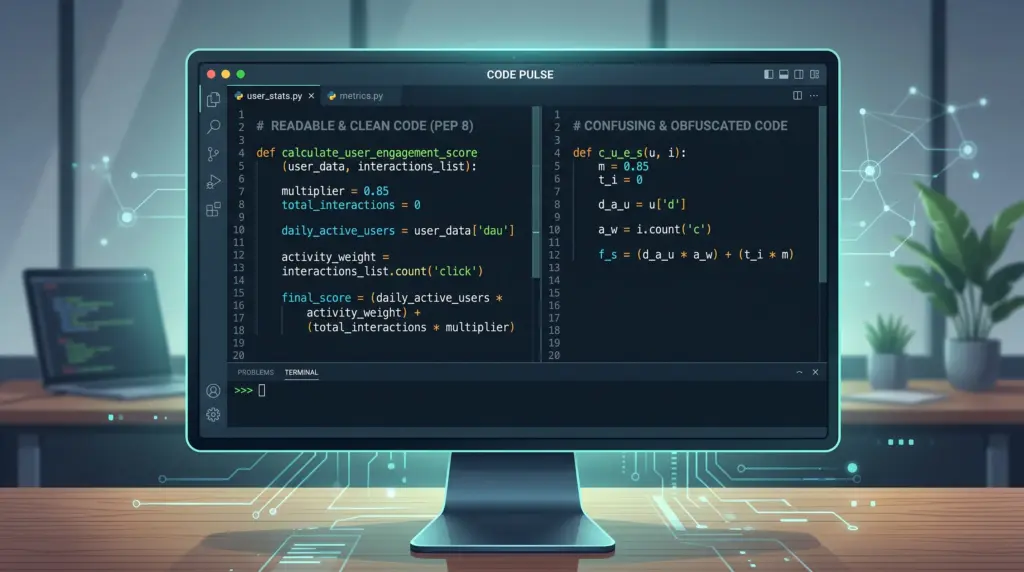
- Clear Names: Choose names that describe the purpose of variables and functions instead of unclear abbreviations.
- Focused Functions: Keep each function responsible for a specific task to make it easier to test and reuse.
Choosing Variable and Function Names
Proper naming directly affects how developers understand code, especially as a project grows larger. Furthermore, descriptive names make the purpose of each element clear without requiring readers to examine the entire implementation. Thus, maintaining standard rules is essential.
- Descriptive Names: Choose names that clearly explain the data or task represented by each element.
- Avoid Abbreviations: Avoid unclear abbreviations that may make the code harder to understand.
- Consistent Style: Follow the same naming conventions throughout the project to maintain consistency.
Using Comments and Documentation Wisely
Comments should not explain every line of code. Instead, they should clarify decisions that may not be obvious from the implementation itself. Moreover, docstrings describe functions and expected behavior, making code much easier to understand.
- Explain Reasons: Use comments to explain why a particular approach was chosen when it is not obvious.
- Document Functions: Describe important inputs, outputs, and expected behavior clearly.
- Keep It Updated: Update documentation whenever functionality changes to prevent outdated information.
Using Type Hints Effectively
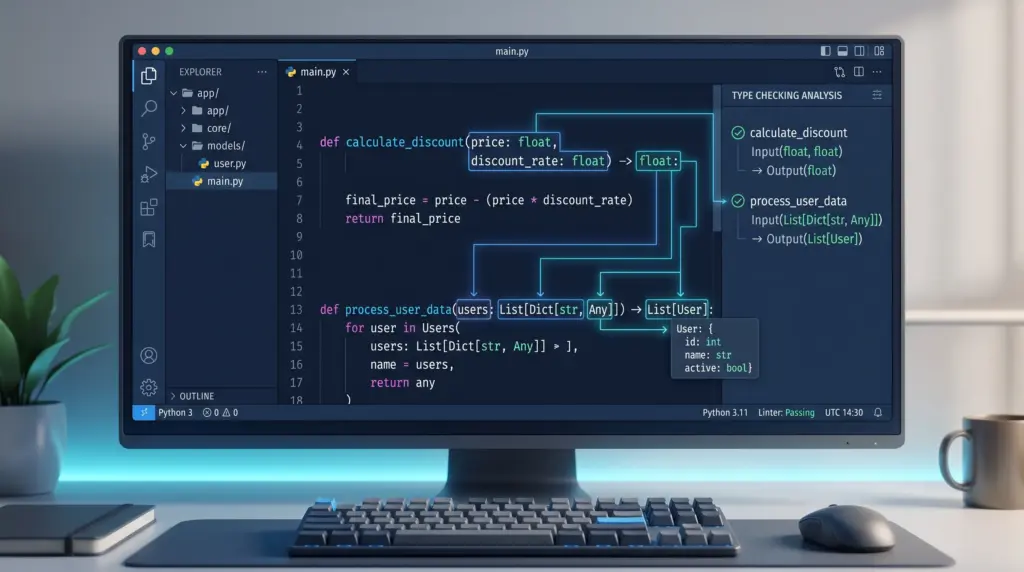
Type hints clarify expected input and output types of functions. Consequently, they help development tools analyze code more effectively. Python’s typing system provides additional information without forcing types during runtime execution.
- Better Clarity: Make expected types easier to understand when reading functions.
- Early Checking: Static type checkers can identify certain issues before the program runs.
- Easier Maintenance: Reduce ambiguity when functions are modified or reused in different parts of a project.
Handling Exceptions and Errors
Reliable Python code requires proper error handling. Expected problems should be handled deliberately rather than ignored behind broad exception handling. Therefore, catching specific exceptions makes troubleshooting much easier.
- Catch Specific Errors: Handle expected exception types instead of relying on broad exception handling.
- Useful Messages: Provide clear error messages that help identify the problem and its location.
- Do Not Hide Errors: Avoid suppressing exceptions that indicate problems requiring further investigation.
Managing Packages and Virtual Environments
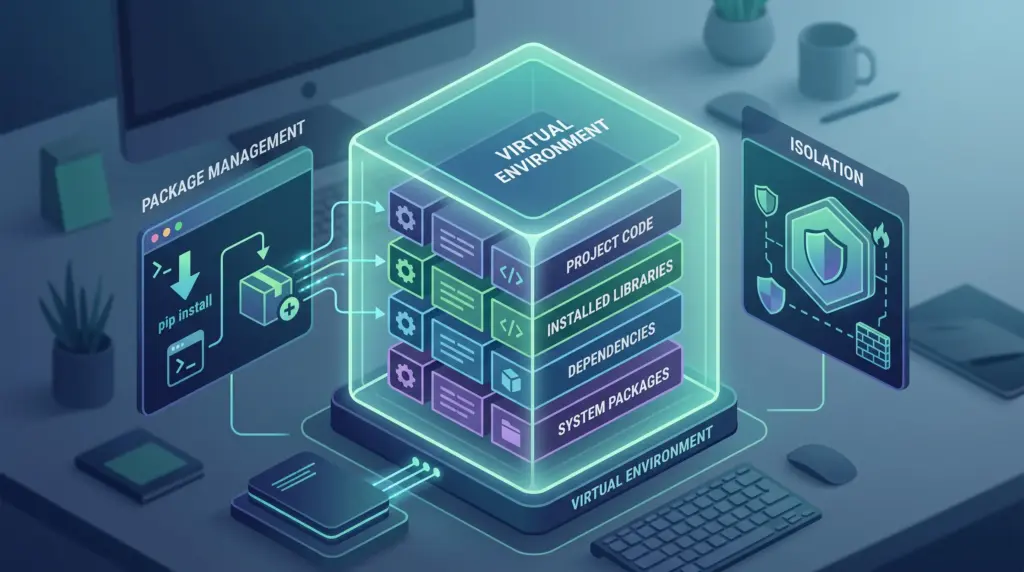
Virtual environments isolate project dependencies, while package management tools help track required libraries. According to the Python Developers Survey, 74% of respondents reported using pip alongside tools like Poetry, Conda, and uv.
- Separate Environments: Create an isolated environment for each project to reduce dependency conflicts.
- Fixed Versions: Record suitable package versions to help maintain consistent development environments.
- Review Packages: Regularly review dependencies and update them when necessary.
Writing Automated Tests
Automated tests verify that functions behave correctly and reduce the risk of introducing bugs after code changes. Furthermore, testing should cover both normal scenarios and edge cases around critical functionality.
- Core Functions: Test expected outputs for the most important operations in the code.
- Edge Cases: Test empty values, boundary conditions, and invalid inputs where appropriate.
- Repeated Testing: Run tests after important changes to make sure existing functionality still works correctly.
Improving Performance Without Overcomplicating Code
Python performance optimization begins by identifying where resources are actually consumed. Measuring performance before making changes helps avoid unnecessary optimization. Thus, it keeps the code clean and maintainable.
- Measure Performance: Use suitable profiling tools to identify slow or resource-intensive operations.
- Choose Suitable Structures: Select lists, sets, dictionaries, and other structures based on the required operation.
- Reduce Repetition: Avoid repeating calculations or operations unnecessarily, particularly inside loops.

Organizing Files and Modules
A logical file and module structure makes Python projects easier to navigate, maintain, and expand. Related functionality should be grouped together. Consequently, large files containing unrelated responsibilities are successfully avoided.
- Logical Structure: Group related functions and components into clear modules.
- Defined Responsibilities: Give each module a clear purpose instead of combining unrelated tasks.
- Organized Imports: Keep imports structured and easy to follow to simplify dependency tracking.
Reviewing and Improving Code Continuously
Python best practices require ongoing review because code quality depends on more than initial writing. Regular reviews can identify unnecessary complexity, improve readability, and reduce issues as projects grow.
- Check Code Style: Make sure the code follows consistent formatting and naming conventions.
- Remove Duplication: Identify repeated code and reorganize it when doing so improves maintainability.
- Review Dependencies: Check packages and versions regularly and remove unnecessary dependencies.