What Is PHP and How Does It Work?
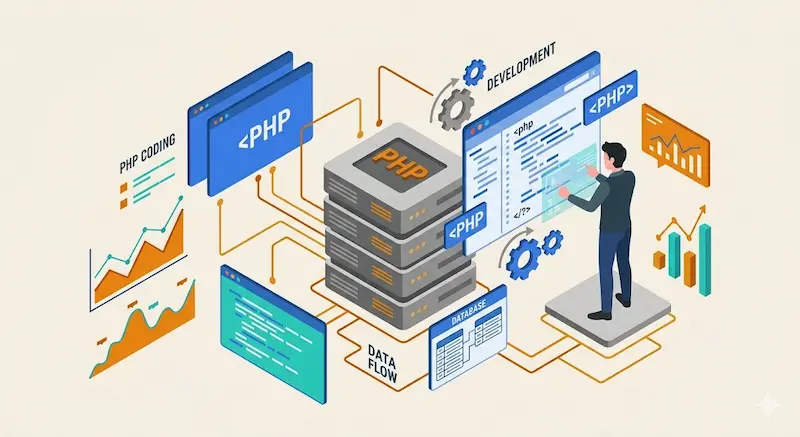
PHP is an open-source tool. It helps build web pages. Furthermore, it runs on the server, processes user requests, and sends content to browsers.
Common PHP Uses:
- Dynamic Websites: It creates web pages that change based on user actions.
- Database Integration: Additionally, it connects apps to databases to store data.
- Web Applications: It supports interactive systems that use server logic.
Is PHP Easy to Learn?
PHP has simple rules. Therefore, it is a great starting point for new developers. In addition, clear guides help users learn fast.
Why PHP Is Easy to Learn:
- Simple Syntax: Beginners can read the basic code easily.
- Extensive Documentation: Thus, official guides explain all features.
- Quick Practice: Coders can test tasks without hard setups.

PHP Adoption in Web Development
PHP is still very popular today. In fact, W3Techs notes that it powers many sites. Consequently, it remains a top choice for web apps.
Factors Behind PHP Adoption:
- Large User Base: It offers many free guides and tips.
- Active Community: Moreover, peers solve coding problems fast.
- Wide Tool Selection: Packages help build projects smoothly.
What Are the Main Advantages of PHP?
PHP is flexible and easy to use. As a result, it handles databases, files, and forms well. Furthermore, it creates dynamic content safely.
Key PHP Advantages:
- High Flexibility: It builds small or large apps easily.
- Database Support: Also, it connects with databases fast.
- Open Source: Developers use the core language for free.

PHP Performance and Version Improvements
PHP gets faster with every update. For instance, JetBrains reports that most devs use PHP 8. Therefore, modern tools boost site speed.
Factors Affecting Performance:
- Modern Versions: New updates run code much faster.
- Code Quality: Meanwhile, clean code lowers server load.
- Server Configuration: Good settings improve app response.
PHP Frameworks and Their Benefits
Frameworks make coding easier. For example, Laravel is very popular today. Thus, they offer reusable tools for web projects.
Popular PHP Frameworks:
- Laravel: It builds scalable web apps fast.
- Symfony: Additionally, it offers flexible components.
- CodeIgniter: It gives a light framework approach.

What Are the Disadvantages of PHP?
PHP has some drawbacks too. However, bad code causes maintenance issues. Consequently, flexibility can sometimes hurt code consistency.
Common PHP Disadvantages:
- Code Quality Differences: Poor habits make apps hard to fix.
- Security Risks: Also, bad scripts expose data.
- Large Project Complexity: Big apps need strict system rules.
PHP Security and Best Practices
Security depends on good coding habits. Therefore, developers must handle user data safely. In short, updates prevent system bugs.
Essential Security Practices:
- Validate User Input: Check data to stop bad inputs.
- Protect Sensitive Data: Meanwhile, encrypt private user info.
- Keep Systems Updated: Regular patches fix known security flaws.

When Should You Use PHP?
PHP fits dynamic web projects well. However, you must check app needs first. Thus, growth and security matter most.
Suitable PHP Use Cases:
- Web Applications: It handles core server tasks smoothly.
- Dynamic Websites: Additionally, it manages changing content.
- Framework-Based Development: Frameworks organize app architecture.
How Should You Choose PHP for a Project?
Base choices on real project goals. Therefore, evaluate traffic, data, and security needs. In short, proper tools ensure long-term success.
Important Selection Criteria:
- Project Requirements: Define goals and performance targets.
- Scalability Needs: Moreover, ensure future growth support.
- Security and Maintenance: Pick options that ease updates.
Conclusion: Is PHP Still a Good Choice?
PHP remains a strong tool today. However, it requires clean code and regular updates. Thus, it builds reliable apps successfully.
Key Takeaways:
- Flexible Option: It supports many web development tasks.
- Secure Practices: Additionally, updates protect systems.
- Reliable Architecture: Proper tools ensure long-term app health.