
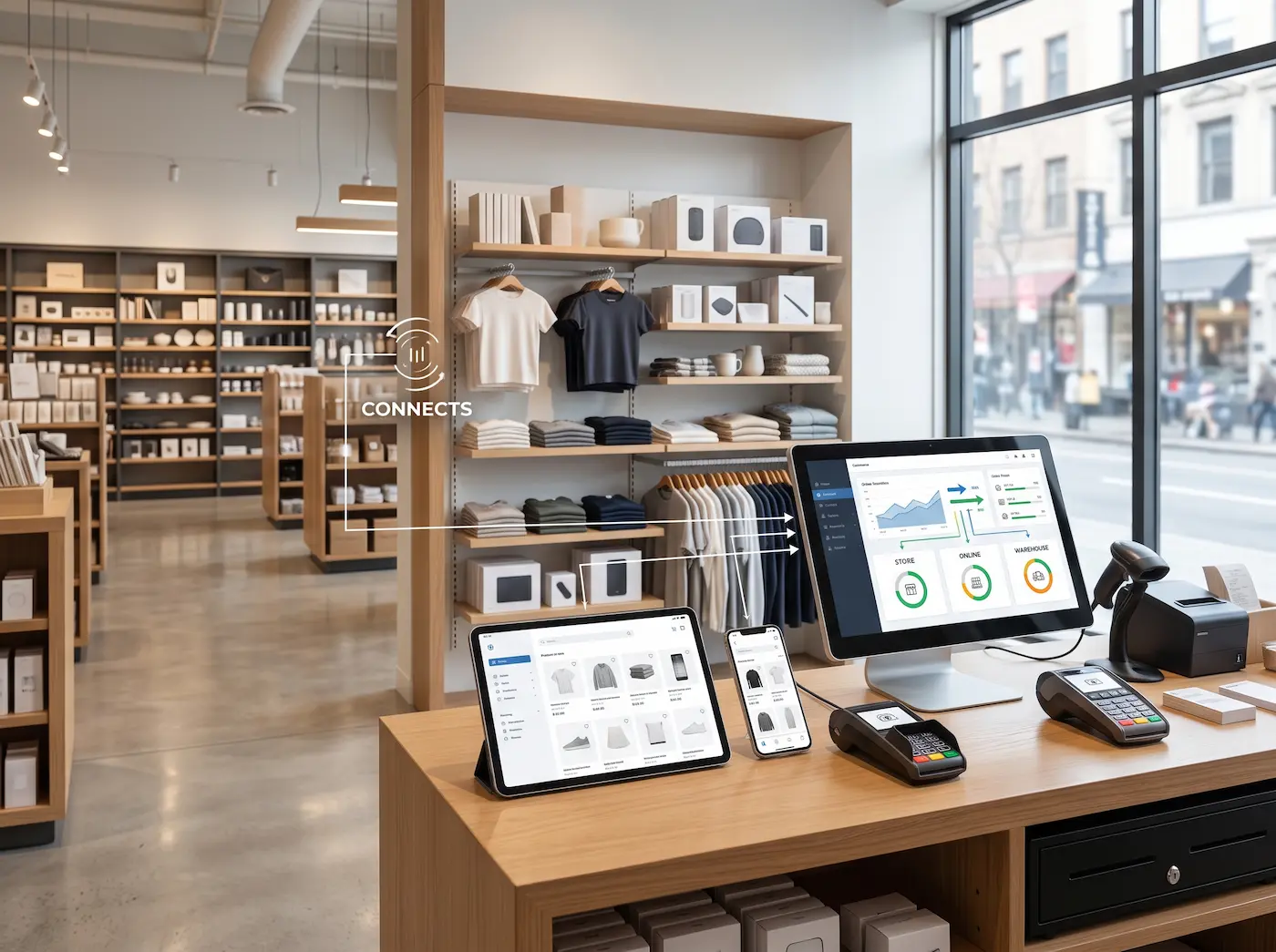
The Concept of Unified Commerce and Digital Synchronization
Unified commerce aims to bring all direct and electronic sales operations together within a single digital environment. In fact, this environment ensures accurate and impartial data flow. Furthermore, it relies on several key pillars to accelerate digital transformation:
Pillars of Transformation Toward the Unified Concept:
- Real-time Record Linking: Transaction data is updated immediately as it happens to avoid redundant entries.
- Database Unification: All centralized customer and product movements are securely stored in one place.
- Sales Interface Integration: This integration enables seamless connection across different platforms simultaneously.
Effective Multi-Outlet Inventory Management
Direct warehouse linking significantly reduces stockout errors. Moreover, it accurately tracks available quantities across all branches and platforms. In this context, according to Statista statistics, real-time inventory integration helps reduce holding costs by up to 10%.
Mechanisms for Controlling Product Movement:
- Automatic Balance Updates: Available quantities are adjusted immediately upon purchase.
- Shipping Order Routing: The system identifies the nearest branch to process the order with maximum speed.

Direct Digital Purchasing and Fulfillment Experience
Consumers have multiple options to purchase products through digital platforms. Consequently, they can easily pick up their orders from the nearest physical location. Therefore, this mechanism provides a flexible experience tailored to modern needs.
Steps to Deliver a Flexible Experience:
- Ordering via Apps: The process begins with digital purchasing and fast, easy payment.
- On-site Order Preparation: Shipments are prepared at the chosen location immediately after order receipt.
- Instant Delivery Confirmation: Financial and inventory transactions are closed with a single touch.
Unifying Loyalty Programs and Digital Services
Unified programs help aggregate consumer reward points with high efficiency. Furthermore, they allow discounts to be applied regardless of the purchasing channel used. Hence, sustainable customer loyalty is achieved.
Consumer Experience Incentive Tools:
- Automatic Point Accumulation: Rewards are added whether the customer purchases from the store or via the platform.
- Direct Benefit Redemption: The system allows discounts to be used across any available sales outlet flexibly.

Automated Return and Exchange Policies
Digital synchronization enables items bought through the app to be returned at any physical outlet with ease. In reality, this system eliminates the complications of traditional paperwork. Consequently, the customer experience becomes much smoother.
Steps for Settling Returned Transactions:
- Reference Number Verification: Electronic invoices are accurately matched via the smart system.
- Inventory Re-settlement: Shelf quantities are updated immediately upon receiving the returned product.
- Direct Account Settlement: Funds are instantly credited back to the customer’s digital wallet without delay.
Data Analytics and Comprehensive Dashboards
Analytics tools provide a centralized, comprehensive overview to accurately monitor sales channel performance. Additionally, they help track revenues and sales trends clearly. McKinsey reports indicate that investing in unified sales data analysis boosts operational efficiency by 15%.
Sector Performance Monitoring Reports:
- Real-time Sales Monitoring: Enables instant tracking of transaction volumes across all channels.
- Identifying Purchasing Preferences: Helps understand customer behavior and precisely identify top-selling products.

Field Operations and Technical Teams Management
System unification helps efficiently manage inspection, maintenance, and delivery tasks. Meanwhile, it ensures execution schedules are tightly controlled. Consequently, the overall quality of service provided to customers increases.
Organizational Elements for Fieldwork:
- Smart Task Assignment: Relies on assigning duties based on the team’s geographic location.
- Digital Completion Proof: Signatures and data are recorded instantly using mobile devices.
- Routine Maintenance Scheduling: This step helps minimize breakdowns through automated tracking.
Procurement and Supplier Relationship Management
Automation aids in sending quotation requests and tracking incoming shipments efficiently. Furthermore, it ensures uninterrupted operational flow. According to Gartner studies, automating procurement processes reduces administrative errors by over 30%.
Supply Chain Organization Solutions:
- Supplier Database Management: Includes precise archiving of evaluations and contract terms.
- Automated Purchase Orders: Supply requests are sent automatically when safety stock thresholds are met.

Integration with Electronic Payment Gateways
Direct purchasing requires providing a secure and integrated payment environment. In reality, this environment must comply with global security standards while supporting various currencies and digital wallets. Consequently, customers feel completely secure when completing transactions.
Security and Settlement Standards:
- Financial Transaction Encryption: Bank card data is protected according to top global standards.
- Automated Accounting Settlement: Financial entries are recorded accurately right upon payment completion.
Automation of Archives and Electronic Records
Digital archives guarantee the protection of documents and invoices while ensuring easy access. Moreover, files are kept securely inside strictly encrypted folders to ensure confidentiality. Forbes notes that full transition to digital archiving increases data retrieval speed by 40%.
Secure Data Preservation Essentials:
- Hierarchical License Classification: Folders are divided by work department and branch for easy retrieval.
- Permissions and Full Encryption: This policy prevents unauthorized access to critical data.