

Understanding React Native for App Development
React Native is a popular framework. It helps developers build apps for multiple platforms while reusing much of their code. It uses React for user interfaces. Moreover, it provides access to native platform capabilities when required.
- Cross-Platform Development: Build applications for different platforms while reusing a large portion of the codebase.
- Native-Like Interfaces: Use components that connect with native platform elements to create responsive user experiences.
- Native Integration: Connect the application with Android and iOS native code when platform-specific capabilities are required.
Defining React Native App Requirements
A successful development process begins by identifying required features and user flows before writing code. Requirements analysis helps determine authentication, data management, backend communication, and payment needs.
- Core Features: Define main actions users should perform, such as registration, browsing, ordering, and account management.
- Target Platforms: Identify required operating systems and devices to address platform differences during development.
- Payment Requirements: Define supported currencies, payment methods, refunds, cancellations, and transaction statuses.
Designing the User Experience and Payment Flow
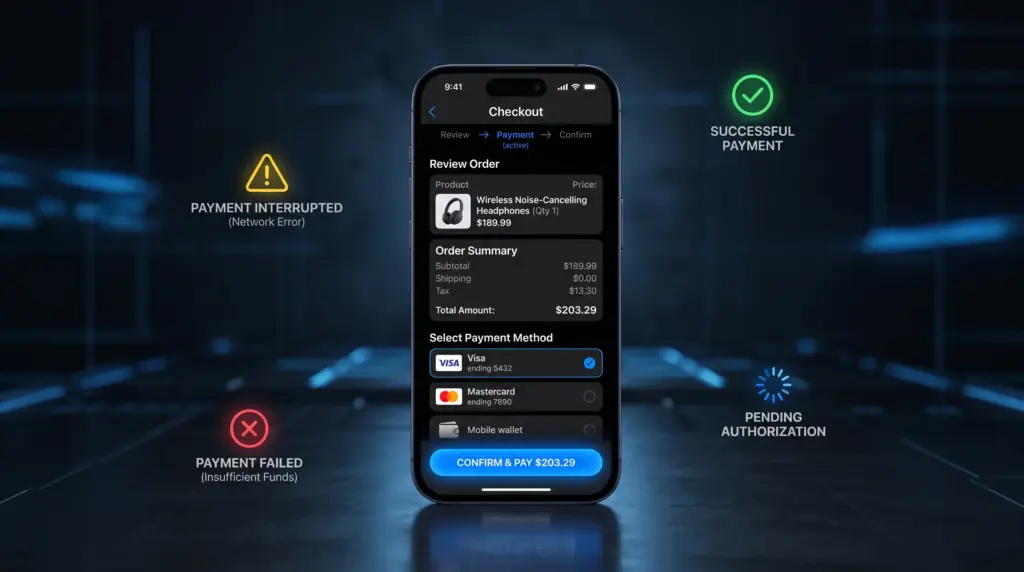
The journey from selecting a product to completing a payment should remain simple. The interface must clearly display the total amount while preparing users for successful, failed, or pending transactions.
- Order Review: Display order details and the final amount clearly before the payment begins.
- Payment Selection: Present available payment methods without overwhelming users with unnecessary choices.
- Transaction Confirmation: Show a clear result after payment and provide an appropriate next step when an issue occurs.
Choosing the Right Payment Gateway
Selecting a payment service depends on supported markets, currencies, security requirements, and integration options. Different providers offer diverse APIs and tools for handling transaction states.
- Supported Methods: Make sure the service supports cards, wallets, and payment options required by the application.
- API Quality: Review documentation, SDKs, testing tools, and available APIs before starting integration.
- Security Standards: Examine the provider’s security practices and requirements for handling payment-related information.
Connecting React Native With Payment Services
Payment integration generally combines the application, backend, and payment provider together. Therefore, sensitive operations should be handled through a secure backend instead of exposing secret credentials inside the mobile app.
- Mobile Application: Initiates the payment process and sends required information through the appropriate API flow.
- Backend Layer: Handles sensitive operations and communicates with the payment provider using protected credentials.
- Transaction Result: Verifies payment status before updating order or transaction details inside the application.

Protecting Payment Data and Sensitive Information
Security must be considered from the beginning of integration. Secret API keys should never be embedded inside the app. Furthermore, sensitive information must be protected during storage and transmission.
- Protect API Keys: Keep secret credentials on a secure backend rather than placing them inside the mobile application.
- Secure Communication: Use secure network connections to protect information while it moves between the app and backend services.
- Minimize Sensitive Data: Avoid collecting or storing payment information that is not required for the transaction.
Understanding PCI DSS Requirements
PCI DSS provides technical and operational requirements designed to protect payment account data. Consequently, the standard applies to environments that store, process, or transmit cardholder data.
- Data Scope: Determine whether the application or backend directly handles cardholder information and understand security rules.
- Payment Provider: Evaluate security practices and responsibilities associated with the selected payment service.
- Shared Responsibilities: Clearly identify which security duties belong to the application, backend, and payment provider.

Testing Payments and Handling Errors
Payment integration should be tested across multiple scenarios rather than relying only on successful transactions. Thorough testing covers declined payments, interrupted connections, and duplicate requests.
- Successful Payment: Confirm that transaction and order status update correctly without creating duplicate operations.
- Declined Payment: Provide a clear message and allow users to retry the transaction through a safe flow.
- Connection Failure: Prevent incorrect assumptions about payment status and verify transaction states before retrying.
Improving Performance and Scalability
Payment-enabled apps must remain responsive as transaction volume increases. Optimizing network requests, application state, and resource usage helps maintain reliable performance.
- Reduce Requests: Organize data operations efficiently to avoid unnecessary communication with backend services.
- Manage State: Maintain clear payment and order states to prevent duplicated or conflicting transactions.
- Monitor Performance: Track response times, errors, and resource usage to identify performance problems early.

Launching and Maintaining Payment Features
After deployment, apps require continuous monitoring of transactions, errors, and user behavior. Furthermore, ongoing maintenance helps address changes in APIs, libraries, and operating systems.
- Monitor Transactions: Track successful, declined, failed, and pending payments to identify unusual patterns.
- Update Integrations: Keep React Native, payment libraries, SDKs, and APIs updated to reduce compatibility problems.
- Improve the Experience: Use testing results and user feedback to simplify payment flows and reduce abandonment.