1. Building an Effective Initial Product
This section focuses on turning an idea into a usable prototype quickly. Consequently, this approach helps test the market and reduces risks before full development. Therefore, the main goal is to create the simplest working version efficiently.
- Defining core features: Selecting only the most important functions that deliver initial value.
- Designing a basic experience: Building a simple interface to collect feedback quickly.
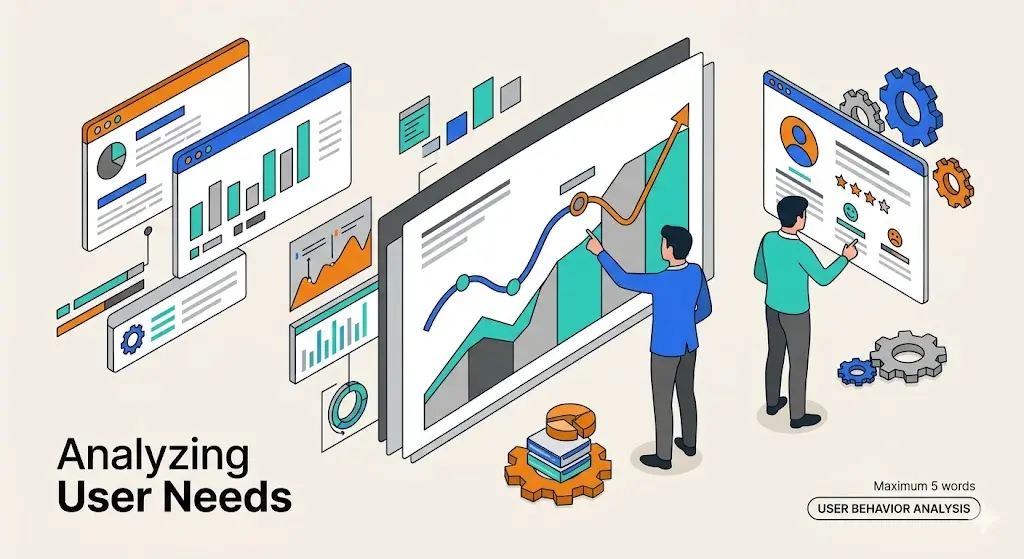
2. Analyzing User Needs
The success of any product depends on understanding real user behavior. Moreover, it is vital to study needs before starting implementation. As a result, you can build a product that solves actual problems.
- Studying usage behavior: Analyzing how users interact with the idea to define priorities.
- Identifying core problems: Focusing on the main challenges that must be solved first.
3. Designing a Simple User Experience
User experience must be clear and easy to reduce complexity. Furthermore, simple designs increase interaction rates. Thus, organizing elements effectively helps users understand the product instantly.
- Easy navigation interface: Designing a structure that allows access with minimal steps.
- Organizing visual elements: Arranging content in a way that helps users navigate easily.
4. Flexible and Scalable Development
The system is built in a structured way for future growth. Specifically, this allows adding features without rebuilding everything. In addition, a solid foundation ensures long-term stability.
- Structured architecture: Dividing the system into modules for easier modification.
- Future scalability support: Preparing the system to handle new features easily.
5. Testing Performance and Quality
Testing is a key step to ensure efficiency before release. For example, finding bugs early saves time later. Consequently, performance measurement ensures the system stays fast under heavy load.
- Bug testing: Detecting and fixing technical issues before public use.
- Performance measurement: Ensuring fast system response during peak times.

6. Behavioral Data Analysis
According to Google Analytics, improving experience relies on data. Specifically, analyzing interaction within the system reveals user needs. Therefore, tracking data helps in making informed decisions.
- Tracking user flow: Understanding the paths users take inside the product.
- Analyzing exit points: Identifying where users leave the experience.
7. Improving Scalability
According to Statista, scalable systems achieve higher long-term growth. In addition, a strong structure supports more users over time. Hence, constant updates are necessary for performance.
- Enhancing technical structure: Building a system capable of handling more traffic.
- Supporting continuous updates: Adding new features without affecting current speed.

8. User Experience and Engagement
According to HubSpot, better experience increases engagement rates significantly. Moreover, simplifying the journey makes users happier. Thus, clear information helps users achieve their goals faster.
- Simplifying user journey: Reducing the steps needed to reach specific goals.
- Enhancing content clarity: Presenting information in a simple and fast way.
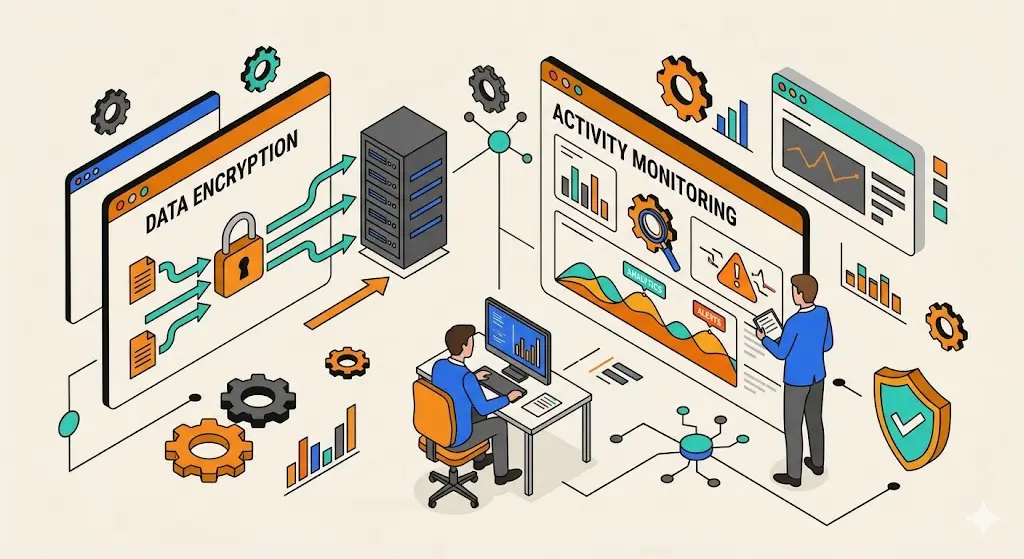
9. Security and Data Protection
Security is a core element in modern digital systems. Therefore, protecting user data ensures trust and continuity. Furthermore, constant monitoring prevents unusual behaviors effectively.
- Data encryption: Protecting information during transfer and storage.
- Activity monitoring: Tracking any unusual behavior within the system.
10. Overall Performance Optimization
According to Gartner, optimization increases user retention rates. Consequently, reducing load times keeps users engaged. Additionally, using resources efficiently makes the system run smoothly.
- Reducing load time: Continuously improving system response speed.
- Optimizing resource usage: Running the system efficiently with minimal resources.
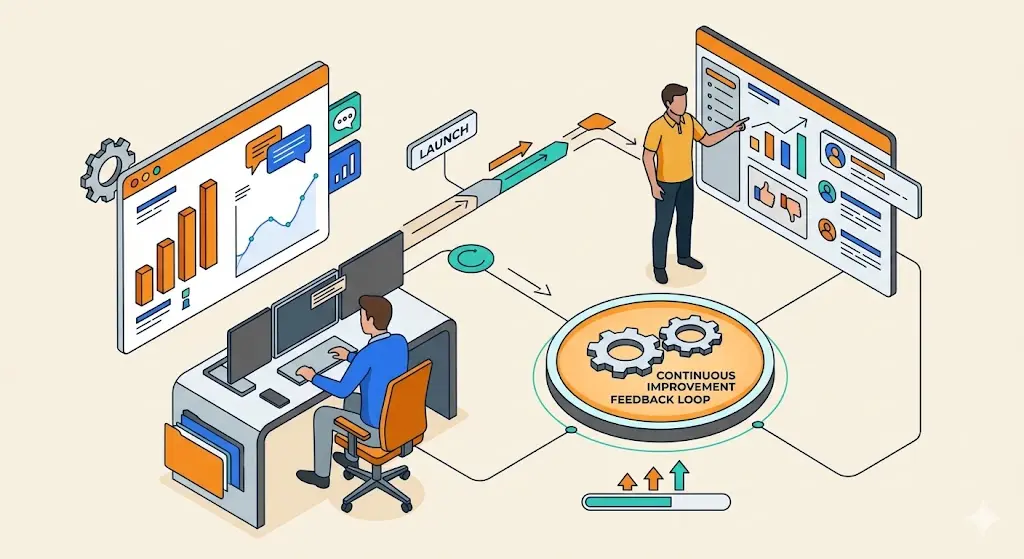
11. Launch and Continuous Improvement
After the initial release, continuous improvement begins. For instance, collecting feedback is vital for growth. Therefore, gradual enhancements ensure the product stays relevant and useful.
- Collecting feedback: Analyzing user opinions to improve the product.
- Ongoing updates: Adding gradual enhancements to ensure product growth.