
Why Is Android App Development Important?
First, an Android app provides a direct way to reach users. Furthermore, with more than 3 billion active Android devices worldwide, a well-planned app can simplify daily tasks, improve accessibility, and create a consistent digital experience.
- Key Benefits of Android Apps
- Reach More Users: An app allows users to access services directly without relying on a browser.
- Improve User Experience: A dedicated interface makes essential features much easier to find.
- Support Future Growth: A scalable structure makes adding new features simpler.
How Should an Android App Be Planned?
Successful development starts by defining goals early. Therefore, good planning reduces complexity and helps prioritize valuable functions.
- Initial Planning Steps
- Define the Goals: Identify the core problem the app should solve.
- Understand Users: Studying user needs helps determine suitable features.
- Prioritize Features: Separating essential functions makes development easier.

What Features Should an Android App Include?
Required features vary by purpose. However, several functions create a complete and convenient experience.
- Essential App Features
- Account Registration: Allows users to create accounts and manage information.
- Notifications: Keep users informed about updates and activities.
- Data Management: Enables users to view and update information.
How Should User Experience Be Designed?
Success depends on interaction. Thus, clear structures reduce steps and make common tasks more convenient.
- Elements of a Good User Experience
- Clear Interface: Helps users find essential features easily.
- Simple Navigation: Makes moving between sections faster.
- Responsive Design: Adapts to different screen sizes.

Why Is Security Important for Payment Apps?
When handling electronic payments, protecting user information is critical. Consequently, proper security measures reduce risks and maintain confidence.
- Payment Security Basics
- Data Encryption: Protects sensitive data from unauthorized access.
- User Verification: Confirms user identity before sensitive actions.
- Session Protection: Reduces unauthorized access to accounts.
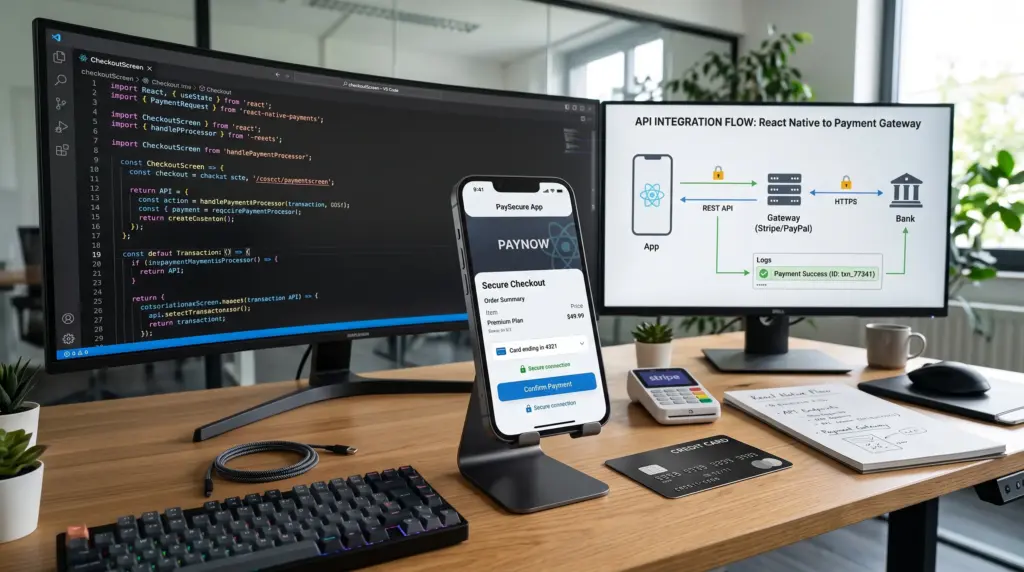
How Can an App Be Connected to Payment Services?
Payment integration uses APIs. Moreover, the share of adults making digital payments increased from 35% in 2014 to 57% in 2021, showing the growing role of digital transactions.
- Payment Integration Steps
- Choose a Payment Method: Select options based on user needs.
- Integrate the Payment API: Connect the app with payment services.
- Confirm the Transaction: Update and display the transaction status.

Which Payment Methods Can an App Support?
Apps support different payment methods. Furthermore, digital wallets are expected to maintain strong growth worldwide.
- Common Payment Options
- Bank Cards: Allow payments using card details.
- Digital Wallets: Provide a convenient transaction method.
- Mobile Payments: Support mobile-based payment methods.
How Should Payments Be Managed Inside the App?
Payment processing continues after submission. Therefore, the app must track status and respond correctly.
- Transaction Management Stages
- Create the Order: Creates a payment request.
- Track the Status: Updated according to actual results.
- Handle Payment Errors: Provides clear info when errors occur.

How Can Android App Performance Be Improved?
Performance affects user experience. According to Android Developers, apps using Kotlin are 20% less likely to crash.
- Key Performance Factors
- Reduce Loading Time: Optimizing data requests helps content load quickly.
- Optimize Resources: Proper memory management improves stability.
- Test Performance: Regular testing helps identify issues early.
How Should an Android App Be Tested?
Testing verifies functions before launch. Furthermore, over 95% of top Android apps contain Kotlin code.
- Essential Pre-Launch Tests
- Functional Testing: Verify registration and core features.
- Security Testing: Check potential vulnerabilities.
- Device Testing: Test across different Android versions.